


What Is Interior Car Detailing: a Car Owner's Guide

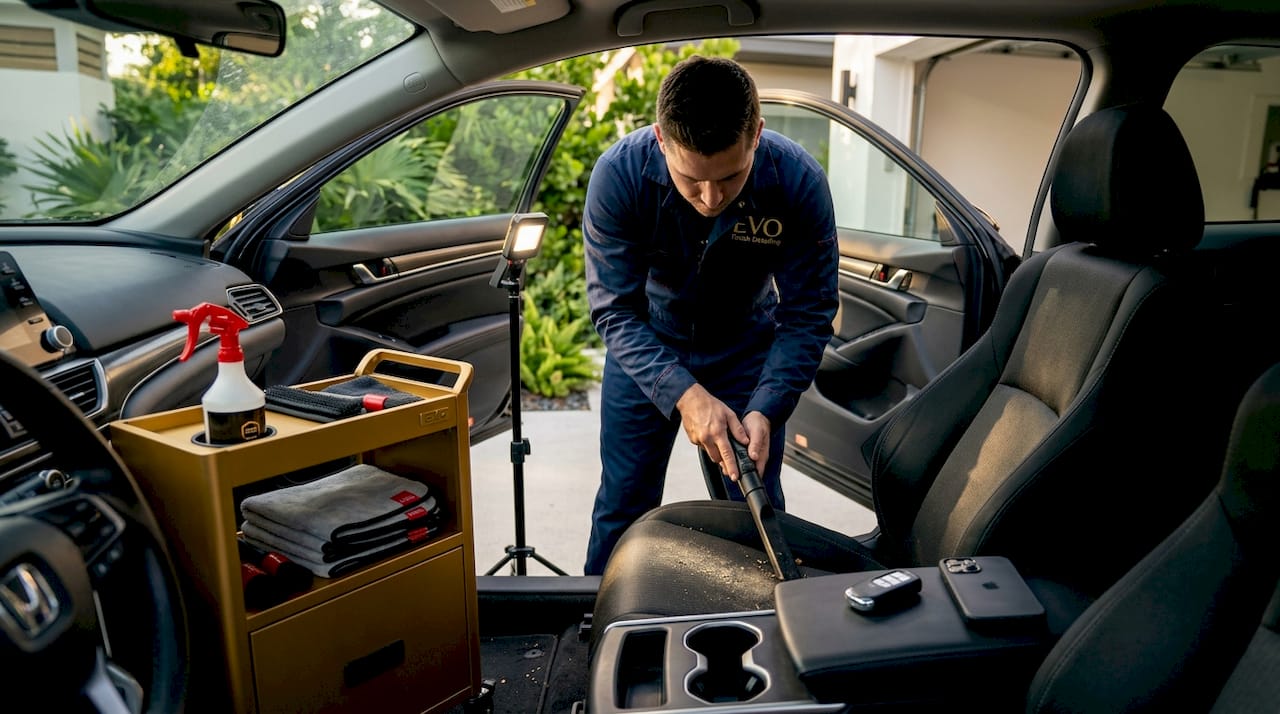
Most car owners think interior car detailing means a quick vacuum and a wipe-down with a damp cloth. It is not even close. What is interior car detailing, really? It is a multi-step deep cleaning and restoration process that targets every surface, fiber, and crevice inside your vehicle. We are talking about eliminating bacteria embedded in seat fabric, removing allergens hiding in air vents, and restoring plastic and leather surfaces to their original condition. If your goal is a genuinely clean, protected, and healthy vehicle interior, understanding exactly what this process involves is where you start.
Table of Contents
Key takeaways
Point | Details |
More than basic cleaning | Interior detailing uses multi-step techniques to remove bacteria, allergens, and embedded dirt that basic cleaning misses. |
Follow a top-to-bottom sequence | Cleaning from headliner down to carpets prevents re-soiling surfaces you have already cleaned. |
Protection extends results | Applying UV-blocking protectants and leather conditioners after cleaning slows fading and cracking between details. |
Detail every 3 to 6 months | Most drivers should schedule a full interior detail at least twice a year, more often with kids or pets. |
Right products matter | Using surface-specific cleaners prevents residue buildup and protects delicate materials inside the cabin. |
What is interior car detailing
Interior car detailing is a thorough, professional-grade process that goes well beyond surface-level cleaning. It involves systematically vacuuming, steam cleaning, shampooing, conditioning, and protecting every material inside your vehicle’s cabin. That includes the headliner, dashboard, door panels, seats, carpets, floor mats, vents, and glass.
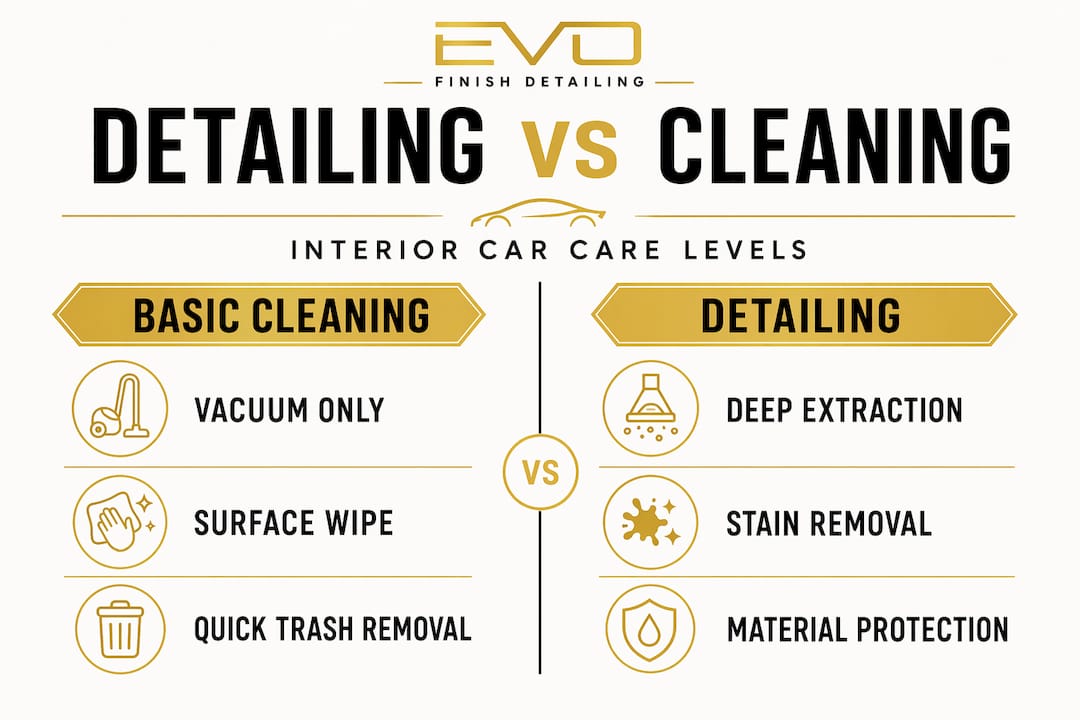
Here is the critical distinction: basic interior car cleaning removes visible dirt. Detailing removes what you cannot see. Professional interior detailing eliminates bacteria, allergens, and odors that are embedded in carpet fibers, seat seams, and deep inside vent slats. It also restores surfaces rather than just wiping them down.
What does interior detailing include in practice? The core steps are:
Vacuuming with specialized attachments to pull embedded debris from carpets and upholstery
Steam cleaning and extraction to sanitize upholstery, carpets, and vents at a deep level
Surface cleaning for the dashboard, door panels, center console, and steering wheel
Upholstery treatment using fabric cleaners or leather conditioners depending on seat material
Glass cleaning on all interior windows for streak-free visibility
Protection application including UV-blocking products on plastics and vinyl surfaces
Compare this to a basic clean, which typically means wiping visible surfaces and running a vacuum over the floor. Detailing addresses fiber-level dirt and embedded soils in every seam and crevice. That is the difference between a car that looks clean and a car that actually is clean.
Pro Tip: Before booking interior car detailing services, check whether the provider uses hot water extraction equipment. This tool is one of the strongest indicators of a thorough, professional detail rather than a glorified cleaning session.
The step-by-step detailing process
Understanding how professionals approach the process helps you evaluate quality and even tackle some maintenance yourself. A proper interior detailing workflow starts before any product is applied.
Remove all items and floor mats. Empty the glove box, center console, and seat pockets. Take out all floor mats for separate cleaning. This gives you unrestricted access to every surface.
Vacuum the entire interior. Start with seats, then move to the floor, under seats, and into every crevice. Using soft and stiff-bristled brushes with the correct vacuum nozzle attachments pulls debris from tight spaces and vent slats.
Clean the headliner carefully. Work from the top down. The headliner is delicate and requires light-touch cleaning to avoid moisture damage. Excess water can cause headliner sagging or adhesive failure, so moisture management is critical at this stage.
Steam clean and extract upholstery and carpets. Steam sanitizing combined with hot water injection-extraction removes embedded grime, stains, and odors that dry vacuuming simply cannot reach. This step is what separates a true interior detail from a standard interior car cleaning appointment.
Clean all hard surfaces. Work across the dashboard, center console, door panels, and steering wheel using cleaners matched to the specific surface material. Specialized cleaners outperform general-purpose products and protect delicate surfaces from long-term damage.
Treat seats based on material type. Fabric seats get shampooed and extracted. Leather seats receive a dedicated cleaner followed by a conditioning treatment to restore suppleness.
Clean interior glass last. Glass is always cleaned last to prevent overspray from earlier steps causing streaks or residue on freshly cleaned windows.
Pro Tip: When detailing your own vehicle, run the air conditioning while cleaning the vents. The airflow pushes dust forward, making it easier to capture with a soft brush and vacuum attachment rather than pushing it deeper into the system.
Material care and protection
Cleaning your car interior thoroughly is step one. Protecting it afterward is what keeps it looking great between full details. This is where many car owners skip a critical part of proper car interior maintenance.

The interior of your vehicle contains at least four distinct material types: fabric upholstery, leather or synthetic leather, hard plastics and vinyl, and glass. Each requires a different approach.
Material | Cleaning Product | Protection Step |
Fabric upholstery | Fabric shampoo with extraction | Fabric guard spray |
Leather seats | pH-neutral leather cleaner | Leather conditioner |
Plastics and vinyl | Interior-specific all-purpose cleaner | UV-blocking protectant |
Interior glass | Ammonia-free glass cleaner | Anti-fog treatment (optional) |
UV-blocking protectants for plastics and vinyl are not optional if you want lasting results. Dashboards and door panels that receive direct sunlight fade within months without protection. The same goes for leather. A quality conditioner prevents the cracking and dryness that accelerates with heat and UV exposure.
Protection and conditioning after cleaning slows UV damage and material degradation, maintaining surface quality significantly longer between full details. Skipping this step means you will need to detail more frequently to maintain the same appearance.
Here is what to apply after a full detail:
UV-blocking plastic and vinyl protectant on the dashboard, door panels, and center console
Leather conditioner on all leather surfaces, including the steering wheel and shift boot
Fabric guard on cloth seats and carpets to resist future staining
Interior glass treatment on all windows for extended clarity
For an in-depth look at what defines premium interior care standards, the approach to material-specific protection is where you see the biggest difference between professional and DIY results.
How often should you detail your car interior
Frequency is where most car owners get it wrong. They either wait too long or assume one annual clean is enough. Detailing every 3 to 6 months is the general recommendation for regular drivers. But your actual schedule depends on how you use the vehicle.
Factors that require more frequent detailing:
Children riding regularly. Food, drink, and general mess accelerate interior contamination significantly. Every 2 to 3 months is appropriate.
Pets in the vehicle. Pet hair, dander, and odors embed quickly into upholstery and carpets.
High-mileage commuters. More time in the car means more sweat, skin oils, and debris transferred to every surface.
Food and drink consumed in the car. Even careful eaters leave residues that build up over time.
Outdoor or work use. Mud, dust, and debris tracked in from outdoor activities require more frequent attention.
Between full details, weekly car interior maintenance habits make a measurable difference. A quick vacuum of the seats and floor, a wipe-down of high-touch surfaces, and removing trash and debris each week keeps contamination from building to a level that requires intensive cleaning. Think of it as the difference between maintaining a result and having to restore one from scratch.
The importance of interior car detailing is not just cosmetic. A vehicle with a clean, well-maintained interior holds a higher resale value, provides a healthier environment for passengers, and simply feels better to drive every day.
My take on why interior detailing matters more than most people realize
I have seen thousands of car interiors at every stage of neglect and care. The one pattern I keep coming back to is this: people dramatically underestimate how much their interior affects their daily experience and their health.
Professional detailing removes allergens and bacteria that have been building up since the vehicle was new. Most people spend 30 to 60 minutes a day in their car. That is a significant amount of time breathing air filtered through dirty vents and sitting on upholstery that has never been properly sanitized. The air quality improvement after a proper detail is noticeable immediately.
What I have also learned is that interior neglect is almost always more expensive than prevention. Leather that cracks from lack of conditioning needs professional restoration that costs far more than a regular conditioning treatment. Carpet stains that sit for months bond to fibers in ways that require aggressive extraction. Addressing issues early through regular car interior maintenance is always the lower-cost path.
My honest perspective: most car owners would benefit from two full interior details per year minimum, combined with a 10-minute weekly maintenance routine. The difference in how the car looks, smells, and feels is dramatic. And if you are ever planning to sell, a detailed interior can directly affect your asking price. It is one of the highest-return investments you can make in your vehicle.
— EVO
Get a flawless interior detail with Evofinish
At Evofinish, we bring professional interior car detailing services directly to you. No drop-offs, no waiting. Our team performs meticulous multi-step detailing that covers every surface, every fiber, and every material in your vehicle’s cabin.

From deep extraction cleaning on carpets and upholstery to UV-protecting plastics and conditioning leather, we handle it all with precision. We use professional-grade equipment and surface-specific products to deliver guaranteed satisfaction on every appointment. Whether your vehicle needs a thorough clean after years of use or regular maintenance to keep it at its best, Evofinish is ready. Book your detail today and experience what a truly clean car interior feels like. WE COME TO YOU. GUARANTEED SATISFACTION.
FAQ
What is the difference between car detailing and regular cleaning?
Regular cleaning handles visible surface dirt through wiping and basic vacuuming. Interior car detailing is a multi-step process that deep cleans embedded grime, sanitizes with steam, conditions materials, and applies protective treatments that regular cleaning never addresses.
What does interior detailing include for seats and upholstery?
Interior detailing includes fabric shampooing with hot water extraction for cloth seats and pH-neutral cleaning plus conditioning treatment for leather. Both processes remove embedded dirt and bacteria that standard wiping leaves behind.
How much does interior car detailing cost?
The cost of interior car detailing varies based on vehicle size, condition, and the specific services included, typically ranging from $100 to $300 or more for a professional detail. Vehicles with heavy soiling, pet hair, or stain removal needs generally fall on the higher end of that range.
What is car upholstery cleaning and is it included in detailing?
Car upholstery cleaning is the process of deep cleaning fabric or leather seat surfaces using specialized cleaners and extraction tools. It is a standard component of a full interior detail and directly improves both appearance and hygiene inside the cabin.
How often should I schedule interior car detailing services?
Most drivers should schedule a full interior detail every 3 to 6 months. Households with children, pets, or high-mileage drivers benefit from detailing every 2 to 3 months to maintain a clean and healthy vehicle interior.
Recommended
This was a really helpful guide for understanding how interior detailing goes beyond basic vacuuming and cleaning. I especially liked the explanation of deep cleaning, odor removal, and upholstery care. The section on Interior Shampoo & Deodorizing clearly shows how proper detailing can make a car feel fresh and comfortable again.