


Paint Protection Service: Guard Your Car's Finish

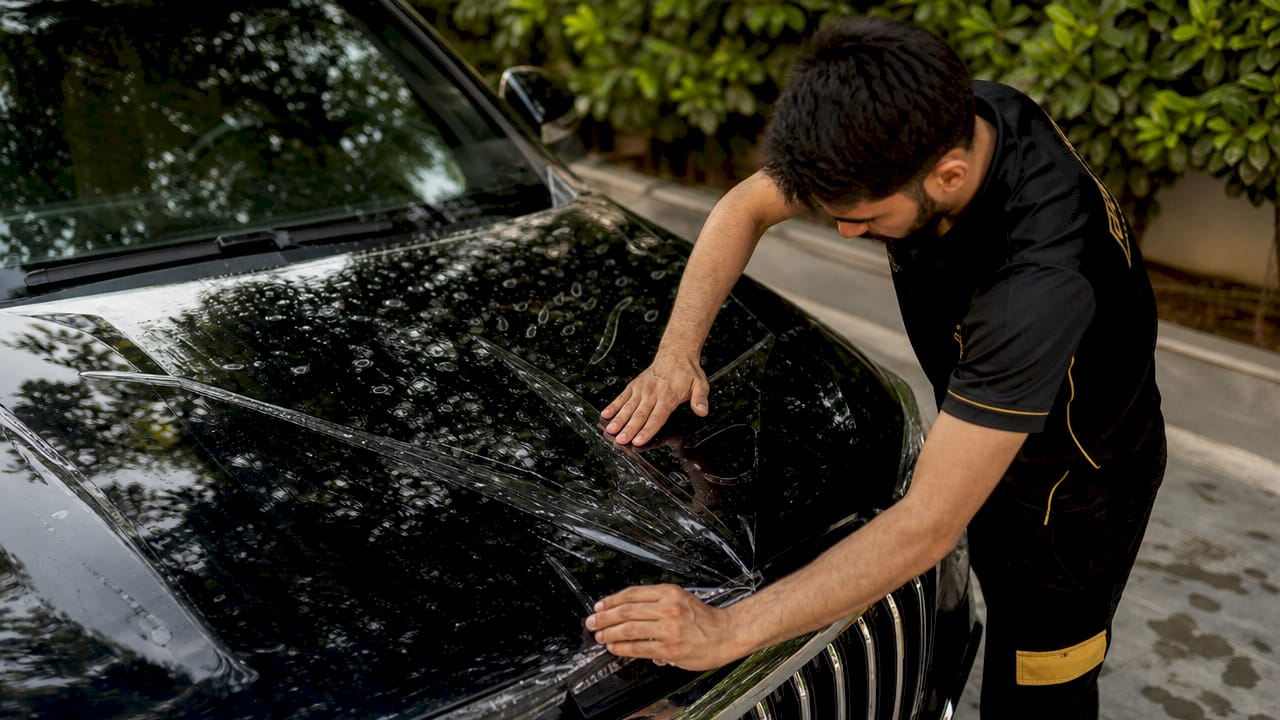
A paint protection service is the professional application of transparent films or chemical coatings to your car’s exterior to defend against stone chips, scratches, UV rays, and environmental contaminants. The two primary methods are paint protection film (PPF), a physical polyurethane barrier, and ceramic coating, a chemical bond that repels water and oxidation. Products from 3M, XPEL, and Solar Gard’s Clearshield Pro represent the industry standard for automotive paint care. Together, these methods form a complete defense system for any vehicle, from daily drivers to weekend classics.
What is paint protection film and how does it protect your car?
Paint protection film is a transparent polyurethane film applied directly to painted surfaces to absorb physical impacts before they reach your car’s finish. It is the most direct answer to stone chips, road debris, and minor abrasions that accumulate on high-impact areas over time. PPF is the recognized industry term for what many car owners call a “clear bra installation,” and both terms refer to the same protective layer.
Where PPF is typically applied
Installers focus PPF on the zones that take the most punishment during normal driving:
Hood and front bumper: The highest-impact area, catching the majority of road debris and stone chips at highway speeds.
Fenders and mirror caps: Exposed to side spray and debris kicked up from adjacent lanes.
Rocker panels: Low-mounted panels that collect road grime, gravel, and salt year-round.
Headlights: Prone to UV yellowing and pitting from fine road debris.
PPF commonly covers these vulnerable zones because they account for the vast majority of paint damage on any vehicle driven regularly on public roads.
Key features that set PPF apart
Modern PPF products from brands like XPEL and 3M include a self-healing elastomeric polymer layer. Self-healing PPF fixes minor surface scratches when exposed to sunlight or warm water, which means the film stays optically clear without frequent polishing. This feature alone extends the useful life of the film significantly compared to older, non-healing films.
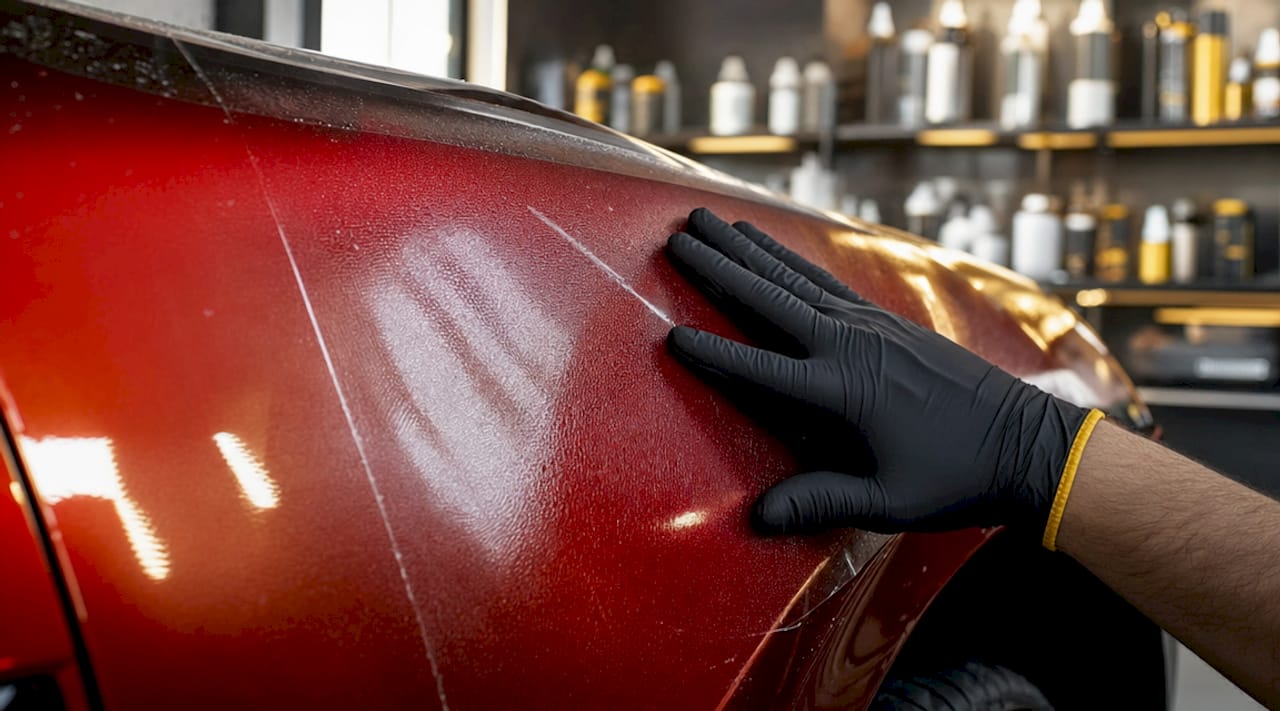
PPF is also hydrophobic and UV resistant, meaning water beads off the surface and the film does not yellow under prolonged sun exposure. Solar Gard’s Clearshield Pro backs this up with a 7-year manufacturer warranty covering yellowing, cracking, bubbling, and adhesive failure when properly installed. That warranty coverage is a direct signal of how confident reputable manufacturers are in their film’s durability.
Pro Tip: Ask your installer specifically which film brand and product line they use, then verify the manufacturer’s warranty terms before committing. Warranty coverage varies significantly between budget and premium films.
One important limitation: poor PPF application causes bubbles, wrinkles, and edge lifting, and it voids manufacturer warranties immediately. Professional installation is not optional if you want the film to perform as advertised.
How do ceramic coatings complement PPF for car paint protection?
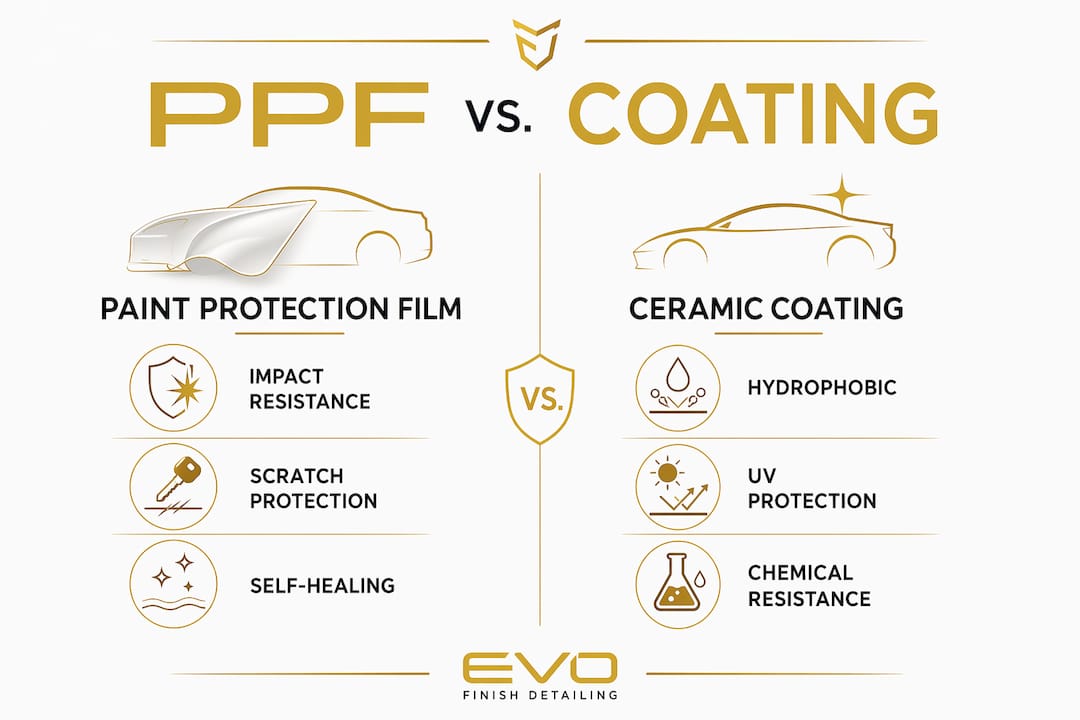
Ceramic coating is a liquid polymer that bonds chemically to your car’s clear coat, creating a hard, hydrophobic surface layer. It does not absorb physical impacts the way PPF does, but it excels at protecting against UV damage, chemical staining, bird droppings, tree sap, and oxidation. Understanding the difference between these two methods is the foundation of any smart automotive paint care decision.
Here is a direct comparison of how PPF and ceramic coatings perform across the most common protection categories:
Protection category | Paint protection film (PPF) | Ceramic coating |
Stone chips and scratches | Excellent physical barrier | No impact resistance |
UV protection | Good, film blocks UV rays | Excellent, bonds to clear coat |
Chemical and stain resistance | Moderate | Excellent |
Hydrophobic (water repelling) | Yes, surface beads water | Yes, highly effective |
Self-healing capability | Yes (premium films) | No |
Typical lifespan | 5 to 10 years | 2 to 5 years |
Best use case | High-impact zones | Full-body environmental defense |
PPF absorbs impacts while ceramic coatings create a hydrophobic surface that repels dirt and UV. This means neither product alone covers every threat your car faces. A vehicle with only PPF on the front end still has unprotected paint on the doors and roof that is vulnerable to oxidation and chemical damage.
Why graphene-infused coatings are worth considering
Graphene-infused ceramic coatings increase hydrophobicity and UV resistance beyond what standard ceramic coatings deliver, and they improve gloss and ease of cleaning. They typically command a 20 to 40 percent price premium over standard ceramic options, but the performance gains in water behavior and long-term paint preservation are measurable. For car owners who want the best paint sealant service available, graphene coatings represent the current top tier.
Pro Tip: Apply a ceramic coating over your PPF, not just on unprotected paint. The coating adds a hydrophobic layer on top of the film, making it easier to clean and extending the film’s surface life.
Combining PPF with ceramic or graphene coatings gives you impact resistance plus environmental and chemical protection in one system. This layered approach is what professional detailers recommend for any vehicle where long-term paint preservation matters.
What should you consider when choosing a paint protection service?
Choosing the right paint protection service comes down to four factors: your vehicle’s value, your driving habits, your budget, and the current condition of your paint. Getting these four factors right before you book an appointment saves you from overpaying for coverage you do not need or underpaying for protection that falls short.
Assess your vehicle’s value and usage. A high-value vehicle or a new car driven on highways daily justifies full-front PPF coverage. A commuter car used primarily in urban traffic may only need a partial kit covering the hood and bumper.
Choose between partial and full-body coverage. Partial coverage on front-end zones costs significantly less than a full wrap and still protects the areas most likely to sustain damage. Full-body PPF wraps can also create visible seam lines in highly contoured areas, which affects appearance on complex body shapes.
Set a realistic budget. PPF service pricing ranges from $1,500 to $12,000 depending on coverage level. Partial front-end kits covering the hood, bumper, fenders, and mirrors sit at the lower end of that range and cover the majority of damage-prone areas. Full-body coverage sits at the premium end and is typically reserved for luxury or exotic vehicles.
Verify your paint condition before booking. Installers refuse to apply PPF over compromised paint because flaking or damaged surfaces cause adhesion failure when the film is eventually removed. If your paint has chips, scratches, or oxidation, a paint correction service must come first.
Confirm installer credentials and warranty terms. Manufacturer warranties like Solar Gard’s 7-year coverage only apply when the film is installed by a certified technician using proper surface preparation and application methods. Always ask for proof of certification and a written warranty before work begins.
Plan for ongoing maintenance. PPF and ceramic coatings both require specific care routines to reach their rated lifespan. Factor in the cost and effort of proper maintenance when comparing protection options.
How to maintain your car after a paint protection service
Proper maintenance is what separates a paint protection investment that lasts a decade from one that degrades in two years. Regular washing with recommended products and parking under cover are the two most consistent factors in extending PPF and ceramic coating lifespans.
Follow these maintenance practices after any paint protection service:
Wash with a pH-neutral car shampoo. Harsh alkaline or acidic cleaners break down ceramic coating bonds and can lift PPF edges over time. Products formulated for coated vehicles are widely available and worth the small price difference.
Use a soft microfiber wash mitt. Abrasive sponges and brushes create micro-scratches in ceramic coatings and can scuff PPF surfaces. A two-bucket wash method with a grit guard prevents dirt from being dragged back across the paint.
Avoid automated car washes with brushes. Tunnel washes with rotating brushes are one of the fastest ways to degrade both PPF and ceramic coatings. Touchless washes are acceptable but hand washing delivers the best results.
Inspect the film and coating regularly. Check PPF edges for lifting, bubbling, or discoloration every few months. Ceramic coatings lose their hydrophobic effect over time. When water stops beading on the surface, a maintenance coat or reapplication is due.
Park strategically. UV exposure and tree sap are two of the most consistent threats to paint protection longevity. Covered parking or a quality car cover significantly reduces wear between washes.
For guidance on keeping your finish clean between professional services, Evofinish’s car wash and wax guide covers the right products and techniques for coated vehicles.
Key takeaways
The most effective paint protection strategy combines PPF on high-impact zones with a ceramic or graphene coating across the full vehicle, applied over properly prepared paint by a certified installer.
Point | Details |
PPF covers physical damage | Film on the hood, bumper, fenders, and mirrors stops chips and scratches before they reach the paint. |
Ceramic coating handles environmental threats | Chemical bonding protects against UV, oxidation, staining, and makes cleaning significantly easier. |
Paint condition determines success | Compromised paint must be corrected before PPF installation or adhesion will fail upon removal. |
Budget shapes coverage level | Partial front-end PPF from $1,500 protects the highest-risk zones without the cost of a full-body wrap. |
Maintenance extends lifespan | pH-neutral washing, covered parking, and regular inspections keep both PPF and coatings performing at full capacity. |
What we’ve learned after protecting hundreds of vehicles
After working on vehicles ranging from daily commuters to high-end exotics, the single most consistent mistake we see is customers skipping paint correction before PPF installation. A film applied over swirl marks, oxidation, or micro-scratches locks those defects in permanently. You will see them every time the light hits the hood at the right angle. Fixing paint after the film is on costs far more than correcting it beforehand.
The second thing we have learned is that partial front-end PPF delivers the best value for most car owners. Full-body wraps make sense for exotic vehicles and collectors, but for the average driver, protecting the hood, bumper, fenders, and mirrors covers roughly 80 percent of the damage that actually occurs in real-world driving. Spending the savings on a quality graphene ceramic coating for the rest of the vehicle gives you better overall protection than a full PPF wrap alone.
We are also direct about DIY PPF kits. Pre-cut kits exist for popular vehicles, and they work reasonably well for small areas like door cup protectors or mirror caps. Attempting a full hood or bumper installation without professional tools and experience almost always results in bubbles, misaligned edges, and a voided warranty. The film itself is not the hard part. The surface preparation, the squeegee technique, and the edge tucking are where inexperienced installers lose the job.
The best protection strategy is not the most expensive one. It is the one matched precisely to how you drive, where you park, and what your paint condition allows.
— EVO
Protect your car’s paint with Evofinish
At Evofinish, we deliver meticulous paint protection services directly to you. Our certified technicians handle everything from PPF installation on high-impact zones to full ceramic coating and paint correction applications, all backed by manufacturer warranties and our own guarantee of flawless results. We assess your paint condition first, correct any defects, and then apply the protection your vehicle actually needs. No guesswork, no shortcuts. If your car needs lasting protection from chips, UV damage, and environmental contaminants, book your detail with Evofinish today and let our team handle it right the first time.
FAQ
What does a paint protection service include?
A paint protection service includes the professional application of PPF, ceramic coating, or both to your vehicle’s exterior. Coverage areas and products vary by service level, but most packages address the hood, bumper, fenders, and mirrors at minimum.
How long does paint protection film last?
Quality PPF from brands like XPEL and Solar Gard lasts 5 to 10 years with proper maintenance. Solar Gard’s Clearshield Pro carries a 7-year manufacturer warranty against yellowing, cracking, and adhesive failure when installed by a certified technician.
Can I apply ceramic coating over paint protection film?
Yes, and professional detailers recommend it. Applying a ceramic coating over PPF adds a hydrophobic layer that makes the film easier to clean and extends its surface life without affecting the film’s impact-absorbing properties.
How much does a paint protection service cost?
PPF service pricing ranges from $1,500 for partial front-end coverage to $12,000 for a full-body wrap. Ceramic coating services are typically priced separately and vary based on vehicle size and coating grade.
Does my paint need to be in good condition before PPF installation?
Yes. Installers will not apply PPF over flaking, chipped, or heavily oxidized paint because adhesion failure during removal can pull paint off the surface. A professional paint correction must be completed first if your paint has visible defects.
Recommended
Comments