


What is carpet shampooing: a complete car guide

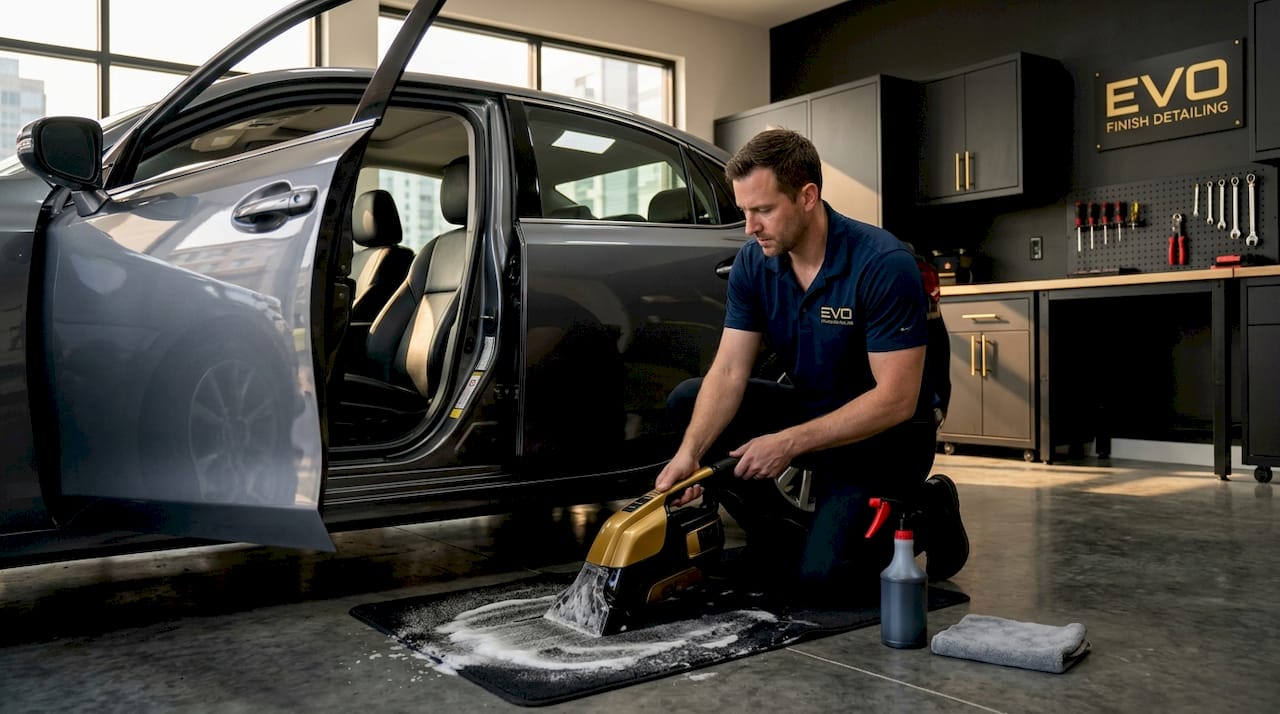
Most car owners assume that if their carpet looks clean right after washing, the job is done. It is not. What is carpet shampooing, and why does it matter more than you might think? The answer lies in what happens beneath the surface. Carpet residue causes rapid re-soiling because leftover detergent acts like a magnet for new dirt, meaning a visually clean carpet can be loading up with grime within days. Understanding the full carpet shampooing process protects your investment and keeps your vehicle genuinely clean longer.
Table of Contents
Common mistakes and misconceptions about car carpet shampooing
How to shampoo your car carpet effectively: step-by-step guide
Why proper drying and residue removal matter for lasting carpet cleanliness
Carpet shampooing methods: choosing the right technique for your car
The overlooked truth about carpet shampooing: why patience and precision trump heavy cleaning
Professional car carpet shampooing services tailored for your needs
Key Takeaways
Point | Details |
Residue causes re-soiling | Leftover detergents after shampooing attract dirt faster, making carpets look dirty sooner. |
Control moisture levels | Using too much water or shampoo can cause mold and mildew under your car’s carpet. |
Extraction is essential | Thoroughly extracting shampoo and moisture prevents sticky residue and maintains cleanliness. |
Drying risks are hidden | Carpet padding stays wet longer than the surface, requiring active drying to prevent damage. |
Choose the right method | Different shampooing techniques suit different carpet types and cleaning needs in vehicles. |
What is carpet shampooing and how does it work in vehicles?
Carpet shampooing is a cleaning method that applies a foamy, detergent-based solution directly to carpet fibers to break down dirt, oils, and stains embedded deep in the material. It goes well beyond vacuuming or a quick spot clean. When you vacuum, you remove surface debris. Shampooing targets what has settled into the fiber structure itself.
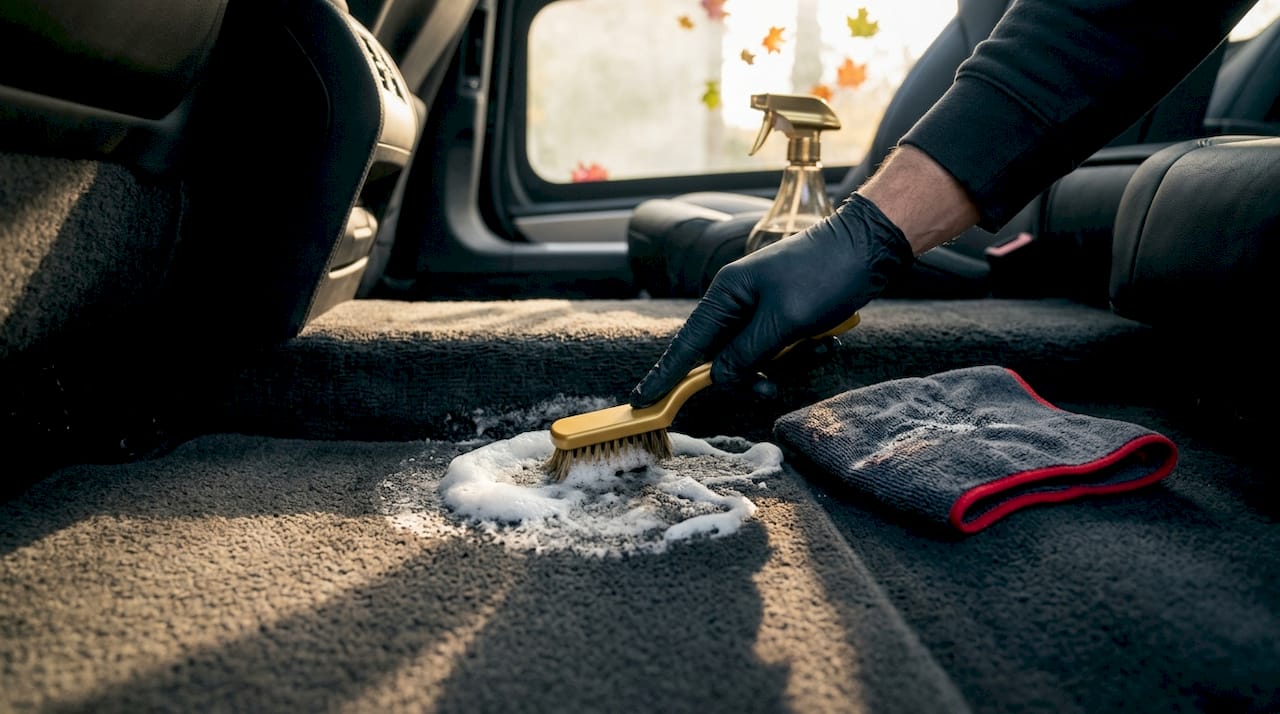
Automotive carpets are porous. That means dirt, dust, food particles, and moisture travel downward into the backing and padding, not just the visible surface. Fabric and carpet shampooing techniques for car interiors use specialized foamy detergent to agitate and lift that embedded dirt from porous fibers. Without agitation and extraction, the dirt simply gets redistributed.
Here is what makes the carpet shampooing process work:
Shampoo application: A solution is applied to break the bond between dirt and carpet fibers
Agitation: A brush or pad loosens the soil from deep within the fibers
Extraction: A wet vacuum or extractor pulls the dirty solution completely out of the carpet
Rinsing: Clean water is applied and extracted again to remove detergent residue
Drying: Air movers or fans complete the process to prevent moisture from sitting in the padding
Controlling moisture is not optional. It is the difference between a clean carpet and a moldy one. For carpet shampooing for vehicle interiors, every step needs to be deliberate and measured.
Pro Tip: Work in small sections of 12 to 18 inches at a time. This gives you full control over how much shampoo you apply and ensures you extract everything before moving on.
Common mistakes and misconceptions about car carpet shampooing
Understanding what carpet shampooing entails, let’s explore the pitfalls that often sabotage cleaning results.
The most damaging belief about car carpet cleaning is that more product and more water equals a better result. It does not. Over-saturating the carpet causes mold and mildew issues in car floor padding that are costly to fix. A carpet that looks clean on top can be wet and fermenting underneath for days.
Here are the four most common carpet shampooing mistakes car owners make:
Using too much shampoo or water. Excess moisture soaks into the padding, which is difficult to dry without professional equipment. This creates the ideal environment for mold.
Skipping thorough extraction. If you apply shampoo and just let it dry, the residue bonds to the fibers. Once that happens, vacuuming alone cannot remove it.
Assuming dry surface means clean carpet. The surface can feel dry while the padding underneath holds moisture for many more hours.
Using the wrong product. General-purpose cleaners can leave residue that household vacuums cannot fully remove, accelerating re-soiling.
These carpet shampooing mistakes are more common than most people realize, and they explain why so many car owners feel frustrated when their freshly cleaned carpet looks dirty again within a week.
Important: A carpet that feels dry to the touch can still contain trapped moisture 6 to 12 hours later. Never assume the job is done until active drying is complete.
How to shampoo your car carpet effectively: step-by-step guide
With common errors understood, let’s walk through the proper steps to shampoo your car’s carpet effectively.
Follow this sequence for reliable, lasting results:
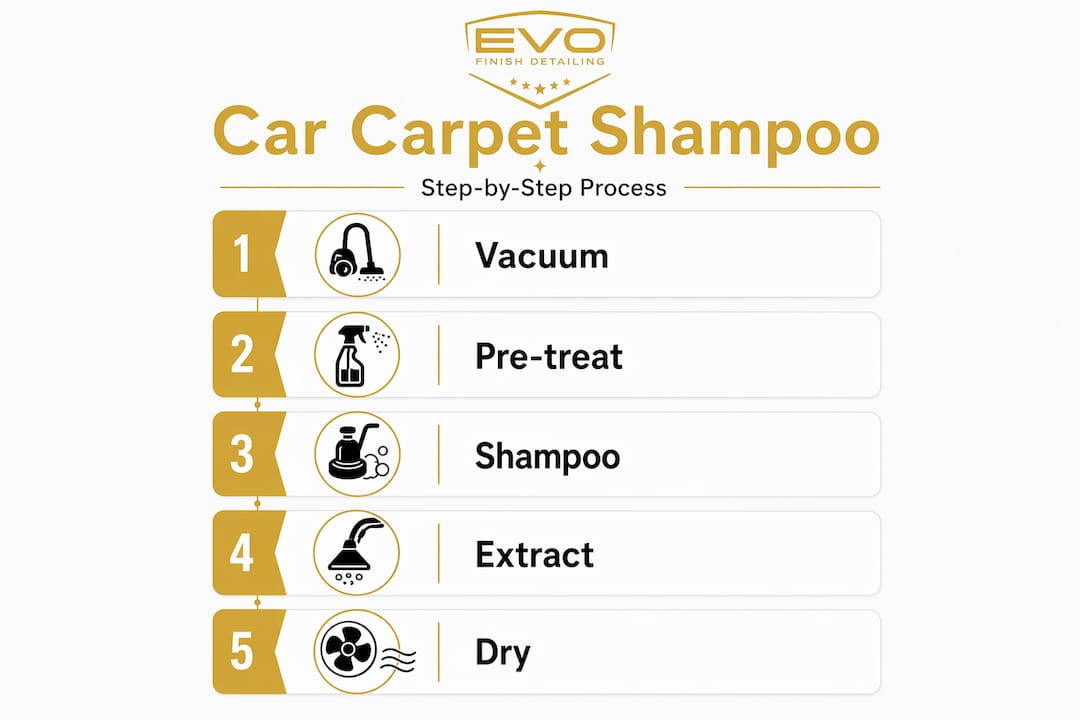
Remove floor mats and vacuum thoroughly. Pull out all mats and vacuum the entire carpet to remove loose debris. This prevents dirt from turning into mud when wet.
Pre-treat stains. Apply a targeted stain remover to any visible spots and let it sit for 3 to 5 minutes before the main shampoo application.
Divide the carpet into sections. Work in sections no larger than a foot and a half square. This keeps moisture manageable and ensures nothing is missed.
Apply shampoo sparingly. Use only the amount recommended on the product label. Let the chemistry do the work. More product does not mean more cleaning power.
Agitate gently with a brush. Use a soft-bristle brush and work in overlapping circular motions. Do not scrub aggressively. The goal is to lift, not grind.
Extract immediately. Use a wet vacuum or carpet extractor to pull out the shampoo and loosened dirt right after agitation. Repeat extraction passes until no more foam appears.
Rinse with clean water and extract again. This step removes detergent residue that would otherwise attract fresh dirt.
Dry completely. Use a fan or car air mover pointed directly into the footwell. Leave doors open and allow at least 6 to 8 hours of drying time.
Extraction pulls contaminants out of the carpet backing, which is what delivers lasting results rather than a temporary visual improvement.
Pro Tip: If you do not own an extractor, rent a portable carpet extractor from a hardware store for under $40 a day. It makes a measurable difference in residue removal compared to a standard wet vac.
Step | Tool needed | Key goal |
Vacuum | Standard vacuum | Remove loose surface debris |
Pre-treat | Stain remover spray | Break down stubborn spots |
Shampoo application | Spray bottle or machine | Penetrate carpet fibers |
Agitation | Soft-bristle brush | Loosen embedded soil |
Extraction | Wet vac or extractor | Remove dirty solution fully |
Rinse and extract | Clean water + extractor | Eliminate detergent residue |
Drying | Fan or air mover | Prevent mold and odor |
For step-by-step carpet shampooing, following this sequence consistently produces results that hold up for months, not days.
Why proper drying and residue removal matter for lasting carpet cleanliness
Next, we’ll highlight why careful drying and residue management are the keys to preserving your clean carpet’s fresh look and feel.
Surface dryness is one of the most misleading signals in carpet care. You press your hand to the carpet, it feels dry, and you close the car door. Meanwhile, the padding underneath can stay damp for many hours. Carpet padding can remain damp 6 to 12 hours after the surface dries, and stagnant moisture in an enclosed vehicle creates mold quickly.
Why this matters for you specifically:
Mold growth is invisible early. By the time you smell it, it has already colonized the padding.
Foul odors are difficult to eliminate. Once mold or mildew sets in, standard carpet cleaning cannot fully reverse it.
Residue attracts soil fast. Sticky detergent left in the fibers acts like a trap for every particle of dirt tracked in after cleaning.
Re-soiling frustration is real. Many car owners report their carpet looks dirty again within one or two weeks, and undissolved residue is almost always the cause.
Professional detailers always use high-velocity fans and wet/dry vacuums together to accelerate the importance of drying after shampooing. They do not wait for air drying alone.
Key fact: Leaving your car parked in direct sunlight with windows cracked will not adequately dry the padding. Directed airflow is necessary for full moisture removal.
Carpet shampooing methods: choosing the right technique for your car
Now that you understand effective steps and drying, let’s review which shampooing technique suits your vehicle and lifestyle best.
Different carpet cleaning methods carry different trade-offs between cleaning power, drying time, and moisture risk. Choosing the right one depends on how soiled your carpet is and how quickly you need the car back in use.
Method | Moisture level | Drying time | Best for |
Rotary shampooing | High | 4 to 8 hours | Heavy soil, deep cleaning |
Foam extraction | Medium | 2 to 4 hours | Regular maintenance |
Steam cleaning | Low | 1 to 2 hours | Allergen removal, sanitizing |
Dry shampooing | Minimal | Under 30 minutes | Quick refresh, light soil |
Steam cleaning sanitizes with minimal moisture while shampooing lifts heavy soils but requires longer drying time. Neither is universally superior. Your car’s condition and your schedule together determine the right call.
Key considerations for picking the right approach:
Heavy staining or embedded pet hair? Rotary shampooing or foam extraction gives you the agitation power to lift it.
Allergies or odor issues? Steam cleaning reaches high temperatures that kill bacteria and dust mites without saturating the carpet.
Quick turnaround needed? Dry shampooing refreshes the surface fast but does not address deep soiling.
Regular upkeep between deep cleans? Foam extraction every few months reduces buildup without the moisture risk of traditional shampooing.
Knowing your carpet cleaning methods means you never over-clean or under-clean your vehicle’s interior. Each method has its place in a good maintenance schedule.
The overlooked truth about carpet shampooing: why patience and precision trump heavy cleaning
After working with vehicle interiors for years, we have seen the same pattern repeat itself. A car owner over-applies shampoo, scrubs hard, lets it air dry, and calls it done. Two weeks later, the carpet looks worse than before. The instinct to clean harder is understandable, but it is wrong.
Over-wetting is the most common cause of carpet shampoo failures in cars. More water and soap does not remove more dirt. It traps more dirt. The residue issue is not a minor inconvenience either. It is the primary reason most do it yourself carpet shampooing efforts fall short of professional results.
What we consistently see in professional carpet shampooing expert perspective is that the best detailers are measured, not aggressive. They apply less shampoo than you would expect, extract more than you would think necessary, and spend the most time on drying. They treat patience as a technique.
The real home carpet cleaning tip that most guides skip: the extraction pass matters more than the shampoo application. You can use a decent product and still get excellent results if you extract thoroughly. You can use a premium product and ruin your carpet if you skip that step.
For car owners over 50 who have maintained vehicles for decades, this insight reframes the whole task. Carpet maintenance is not about intensity. It is about discipline at each stage, applying just enough, agitating just enough, and drying completely. That approach protects the carpet, prevents odor, and means you shampoo less often because the results last.
Professional car carpet shampooing services tailored for your needs
Knowing the right process is valuable. Having it done for you, correctly, is better. We bring expert carpet shampooing directly to your driveway so you never have to haul equipment or second-guess your technique.
At Evo Finish, we control moisture precisely at every step, from application to full extraction and drying, so there is no residue left behind and no risk of mold in your padding. Our interior reset detail covers carpet shampooing as part of a full interior refresh, and we also offer ceramic coating and paint correction services to protect your vehicle inside and out. We come to you. No drop-off required. Book a carpet shampooing service today and get a genuinely clean interior that stays that way.
Frequently asked questions
How often should I shampoo my car carpet to keep it clean?
For most car owners, shampooing every 6 to 12 months maintains cleanliness without risking damage from over-cleaning. High-traffic vehicles or those with pets or kids may benefit from more frequent attention.
Can I use household carpet shampoo products on my car’s carpet?
Household shampoos are not formulated for automotive carpets and often leave heavier residue, which accelerates re-soiling. Products designed specifically for car interiors or professional services deliver cleaner, longer-lasting results.
Why does my car carpet get dirty so quickly after shampooing?
Residue causes carpets to soil quickly after cleaning because leftover detergent bonds to fibers and attracts fresh dirt like a magnet. Thorough extraction and a clean water rinse after shampooing solve this problem.
Is steam cleaning better than shampooing for car carpets?
Neither is strictly better. Steam cleaning sanitizes with minimal moisture and dries faster, while shampooing removes heavier soil embedded deep in the fibers. The right choice depends on how soiled the carpet is and how quickly you need the vehicle back in use.
How long should I wait before walking on my carpet after shampooing?
You should wait at least 6 to 8 hours before walking on freshly shampooed carpet to prevent re-soiling and allow the fibers to set properly during drying.
Recommended
Comments