


Exterior Detailing Methods That Protect and Impress

Your vehicle’s paint faces a relentless barrage of UV rays, industrial fallout, road grime, and brake dust every single day. Choosing the right exterior detailing methods is what separates a car that looks flawless at 100,000 miles from one that looks tired at 30,000. But with so many car wash techniques, coatings, and products competing for your attention, the decision gets complicated fast. This guide cuts through the noise. We’ll walk you through proven exterior car detailing methods from foundational washes to advanced ceramic coatings, so you can protect your investment and keep your finish looking meticulous.
Table of Contents
Key takeaways
Point | Details |
Method order matters | Always chemically decontaminate before claying to reduce paint marring and protect the surface. |
Two-bucket washing wins | The two-bucket method with grit guards dramatically reduces swirl marks versus single-bucket washing. |
Ceramic coatings last longer | Ceramic coatings outperform wax in durability, reducing how often you need full decontamination. |
Match method to vehicle use | Daily drivers and show cars need different detailing frequencies and product choices. |
Professional details are an investment | Basic exterior detail services start around $50, while premium packages exceed $400 depending on scope. |
1. Understand what drives your detailing decisions
Before you pick a method, you need a framework. The best exterior detailing guide starts not with products but with questions about your specific situation.
Consider these factors:
Surface condition: Fresh paint needs protection. Oxidized or swirl-marked paint needs correction first.
Desired protection level: Are you maintaining a daily driver or prepping a show car? That changes everything.
Climate and environment: Coastal salt, UV exposure, and pollution all accelerate surface degradation and affect how often you detail.
Budget and time: Methods range from a $15 wax to a $1,500 ceramic coating installation. Know what you’re working with.
Maintenance frequency: Precision exterior detailing is recommended every 4 to 6 months, though harsh environments demand more frequent attention.
Pro Tip: Write down your vehicle’s paint condition, where you park it (garage vs. outdoor), and how often you drive it. Those three details will tell you 80% of what method you need before you even open a product bottle.
2. Two-bucket washing method
The foundation of every exterior detailing routine is a proper wash. And the single most impactful upgrade most people can make is switching from one bucket to two.
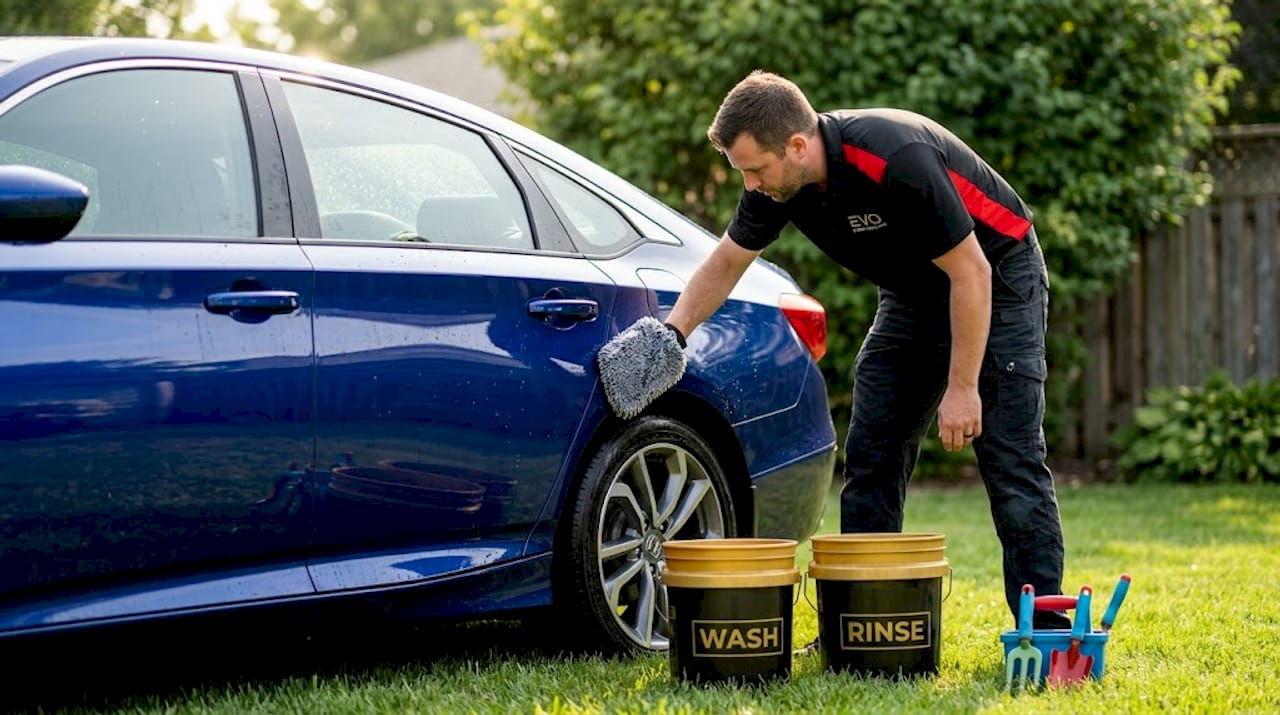
The logic is simple. One bucket mixes dirty rinse water back into your wash solution. That grit goes right onto your paint with your next mitt pass. The two-bucket wash method uses one bucket for clean soapy water and a second bucket purely for rinsing your mitt. Add grit guards to both, and contaminants sink to the bottom instead of circulating back onto the paint.
Use a microfiber chenille wash mitt. Avoid sponges entirely. Sponges trap grit against the paint surface and are notorious for causing fine scratches. Work from top to bottom in straight overlapping passes, never in circles.
Pro Tip: A foam cannon or lance before you touch the car with a mitt makes a significant difference. Foam dwell time loosens grime so your mitt does less mechanical work, which means fewer opportunities for scratches.
3. Proper drying techniques
Most people damage their paint during drying, not washing. This is one of the most under-discussed problems in exterior car detailing.
Dragging a thin towel across wet paint traps grit and creates swirl marks. Drying causes many swirl marks when done with low-quality or improperly maintained microfiber. The solution is a high-GSM (800 to 1200 GSM) waffle-weave or plush microfiber drying towel used with a blotting motion, not a wiping motion.
Never use fabric softener when washing your microfiber towels. Fabric softeners coat the fibers, reducing their ability to absorb water and turning them into abrasive tools against your clear coat. Wash them separately from other laundry using a microfiber-safe detergent.
For the best results, follow up with a detail spray or quick detailer on the surface while it is still slightly damp. This lubricates the towel contact and picks up any remaining water spots without scratching.
4. Clay bar decontamination
Once your paint is clean, run your fingertips across it. If it feels rough or bumpy despite a thorough wash, you have bonded surface contamination. That is where a clay bar comes in.
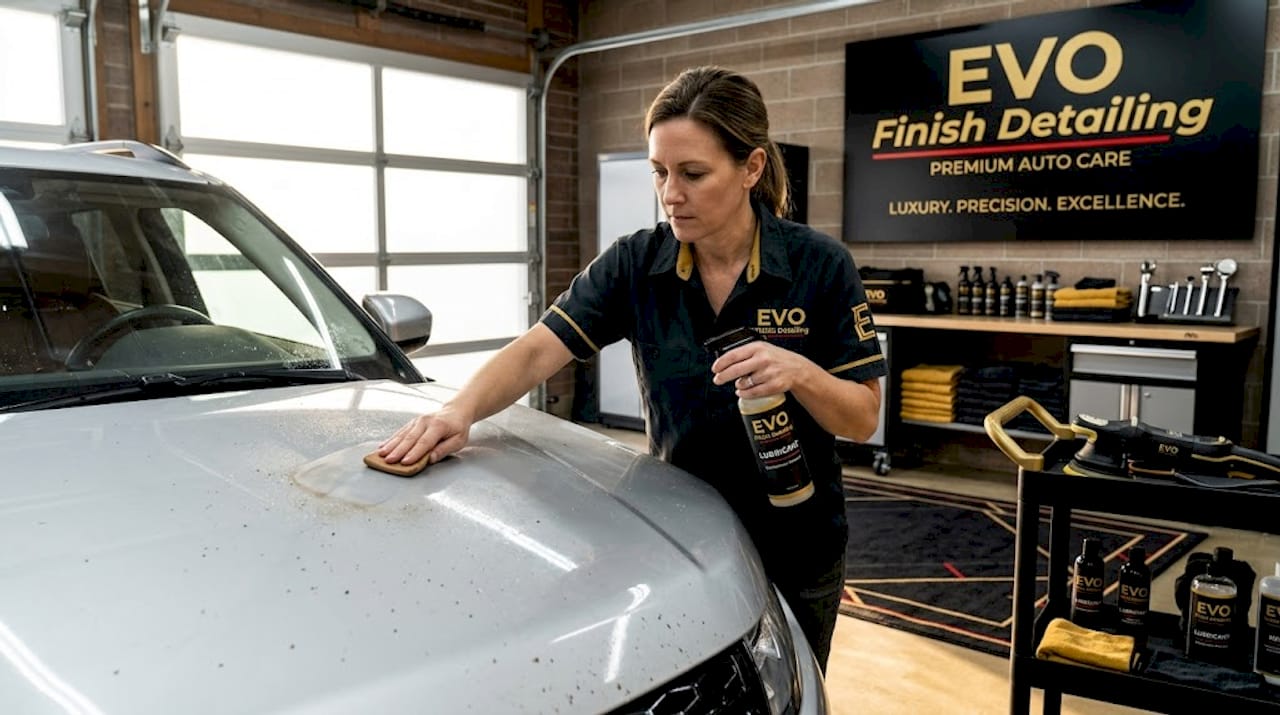
Clay barring is a mechanical decontamination process. The clay physically shears contaminants off the paint surface. It removes overspray, industrial fallout, tree sap residue, and embedded road grime that washing simply cannot lift. Use a dedicated clay lubricant generously and work in small 12 by 12 inch sections. Drop the clay bar once, and it is trash. Do not pick it up and keep using it.
Here is the critical detail most enthusiasts miss: clay usage and paint marring risk is reduced significantly when you chemically decontaminate first. Chemical iron removers dissolve embedded metal particles before the clay ever touches the paint, meaning less work and less friction for your clay bar.
5. Chemical decontamination with iron removers
Iron fallout from brake dust and industrial emissions bonds to paint and eventually causes rust blooms if left untreated. You can see the evidence when an iron remover spray turns purple or red on contact with your panel. That color change is the chemical reacting with iron particles.
Apply an iron fallout remover after washing and before claying. Let it dwell for 3 to 5 minutes on a cool, shaded surface. The chemical does the heavy lifting, dissolving contamination that would otherwise require aggressive clay work. Iron removal is recommended every few months for daily drivers and any vehicle exposed to heavy brake dust.
This step is often skipped in beginner exterior detailing guides. That is a mistake. Skipping iron removal and going straight to clay means dragging dissolved metal particles across your paint with increased friction and a higher chance of marring.
6. Paint polishing for correction
After decontamination, the surface is clean but may still carry visible defects: swirl marks, light scratches, water spot etching, and oxidation. Polishing removes a microscopic layer of clear coat to level those defects and restore gloss.
There are two approaches: machine polishing and hand polishing. Machine polishing with a dual-action (DA) polisher is far more effective and far safer than rotary polishing for most enthusiasts. A DA polisher oscillates rather than spinning in one direction, which dramatically lowers the risk of burning through the clear coat.
Choose your polish based on defect severity. Heavy compounds cut aggressively. Light finishing polishes refine the surface after correction. For sports car detailing, a two-step process (compound followed by finishing polish) delivers a showroom level result. Always work under proper lighting so you can see defects clearly before and after each pass.
7. Waxing for gloss and protection
Wax is the classic finishing step in any exterior detailing routine, and it still has a place in 2026. Carnauba wax gives paint a warm, deep gloss that many enthusiasts prefer aesthetically over the harder look of synthetic products. It is also forgiving to apply and remove.
The tradeoffs are real, though. Wax lasts 4 to 8 weeks under normal conditions. It degrades faster in heat, rain, and UV exposure. That means more frequent reapplication compared to modern alternatives. For a daily driver, that maintenance cycle adds up quickly.
Apply wax in a cool, shaded area using a foam applicator pad in thin, even coats. Less is more. Thick applications are harder to remove and do not increase protection. Buff off with a clean, plush microfiber once the wax hazes.
8. Paint sealants
Paint sealants are synthetic polymer products that bond to the clear coat and provide longer-lasting protection than traditional wax. Where carnauba tops out at 8 weeks, a quality sealant can hold for 4 to 6 months with proper maintenance washing.
Sealants also tend to give a crisper, high-gloss finish compared to the warmer look of carnauba. They are excellent for daily drivers who want meaningful protection without the maintenance burden of waxing every month. Application is similar to wax: thin even coats, proper cure time, and a clean microfiber for removal.
For best results, layer a sealant under a carnauba wax. The sealant provides the durable protective base while the wax adds depth and warmth on top. This combination is a staple in the exterior refinement detail world for good reason.
9. Ceramic coatings
Ceramic coatings are the most durable protection option available for consumer and professional exterior detailing. They bond at a molecular level with the paint and create a semi-permanent hydrophobic surface that repels water, dirt, and chemical contamination.
Coated surfaces resist contamination bonding, which means your maintenance washes are easier and your decontamination intervals stretch significantly. A professional-grade ceramic coating can last 2 to 5 years depending on the product and care regimen.
The catch: surface preparation must be flawless before application. Any swirl marks, scratches, or contamination sealed under a ceramic coating are locked in permanently until the coating degrades. That means paint correction must come first. The investment is real too. Professional ceramic coating and paint correction packages represent the premium tier of exterior car detailing, but the long-term protection justifies the cost for enthusiasts who are serious about their vehicle.
10. Method comparison at a glance
Method | Durability | Cost Range | Skill Level | Best For |
Two-bucket wash | Ongoing | $20–$50 setup | Beginner | All vehicles, regular maintenance |
Clay bar | One-time use | $15–$40 | Beginner | Contaminated paint prep |
Iron fallout remover | One-time use | $15–$35 | Beginner | Pre-clay decontamination |
Hand wax (carnauba) | 4–8 weeks | $20–$60 | Beginner | Show cars, warm gloss finish |
Paint sealant | 4–6 months | $30–$80 | Beginner/Intermediate | Daily drivers needing low maintenance |
Machine polish | Permanent correction | $50–$150+ | Intermediate | Swirl removal, paint restoration |
Ceramic coating | 2–5 years | $500–$2,000+ | Advanced/Pro | Long-term protection, low maintenance |
Professional exterior detailing pricing ranges from $50 for a basic exterior wash and wax up to $500 and beyond for full correction and coating packages. The right choice depends on your budget, goals, and how much time you are willing to invest.
11. Choosing the right method for your situation
Not every vehicle owner needs the same approach. Here is how to match exterior detailing methods to your actual life:
Daily driver in a harsh climate: Prioritize a paint sealant or entry-level ceramic coating. Frequent decontamination with iron removers. Two-bucket washes every 2 weeks.
Show car or weekend vehicle: Carnauba wax over a sealant base for maximum depth and gloss. Full decontamination and polish before each show season.
High pollution or coastal area: Precision detailing frequency increases to every 3 months. Iron removal is non-negotiable. Consider a professional ceramic coating for long-term defense.
Budget-conscious owner: Master the two-bucket wash and a quality sealant. Skip the polish until paint correction is actually needed. Do not buy products you cannot apply correctly yet.
Performance or luxury vehicle: Invest in professional paint correction and ceramic coating. The cost of fixing paint damage later always exceeds the cost of protecting it now.
Pro Tip: Do not buy six products when two will do the job. A great wash mitt, a quality iron remover, and a solid sealant will outperform a cabinet full of mediocre products used inconsistently.
My honest take on exterior detailing methods after years at the bay
I’ve spent years watching enthusiasts obsess over which wax or coating is “the best” while completely neglecting their wash process. That is backwards. In my experience, contamination transfer during washing causes more long-term paint damage than using an inferior protective product.
What I’ve learned is that the process matters more than any single product choice. The detailer who has a disciplined two-bucket wash system with clean mitts and proper drying will have better paint at five years than someone who applies a premium ceramic coating over a compromised wash routine.
I’ve also seen too many enthusiasts reach for the clay bar before ever applying an iron remover. Overusing clay bars when a chemical solution would do the job is a genuinely common mistake, and it costs you paint clarity over time.
My take is this: build your system from the wash outward. Get that right, then layer in your protection products. The method order, the microfiber care, the chemical sequencing. That is where the real results live. A great finish is not about one expensive product. It is about a repeatable, disciplined process.
— EVO
Take your vehicle’s finish to the next level with Evofinish
You now have the knowledge. The next step is putting it into professional hands when the job calls for it.
At Evofinish, we specialize in meticulous exterior car detailing that goes beyond the surface. Whether your vehicle needs a full decontamination wash, a precision paint correction, or a long-lasting ceramic coating, our team brings the expertise and equipment to deliver a flawless result. We come to you, because your time matters as much as your vehicle’s finish.
Our exterior detailing packages are designed for real vehicle owners with real goals. Flexible pricing, expert consultation, and guaranteed satisfaction on every appointment. Ready to protect your investment? Book your detail today and let us show you what precision detailing looks like in person.
FAQ
What are the most effective exterior detailing methods?
The most effective exterior detailing methods combine a two-bucket wash, iron fallout removal, clay bar decontamination, paint polishing, and a protective coating such as a sealant or ceramic coating applied in that specific order.
How often should you detail your car’s exterior?
Precision exterior detailing is recommended every 4 to 6 months, though vehicles in harsh climates with heavy UV exposure, coastal salt, or industrial pollution may need attention every 3 months.
Is ceramic coating better than wax for exterior protection?
Yes. Ceramic coatings bond at a molecular level and last 2 to 5 years, while carnauba wax lasts only 4 to 8 weeks. Coatings also reduce contamination bonding, making regular maintenance washes significantly easier.
Should you use an iron remover before clay barring?
Chemical decontamination with an iron fallout remover should always come before mechanical clay barring. Iron removers dissolve embedded metal particles first, which reduces clay usage, friction, and the risk of paint marring.
How much does a professional exterior detail cost?
Basic exterior detail services start around $50 to $100, while premium packages including paint correction and ceramic coating can exceed $400 to $2,000 or more depending on vehicle size and service scope.
Recommended
Comments