


Car Wash vs Detailing: Key Differences Explained

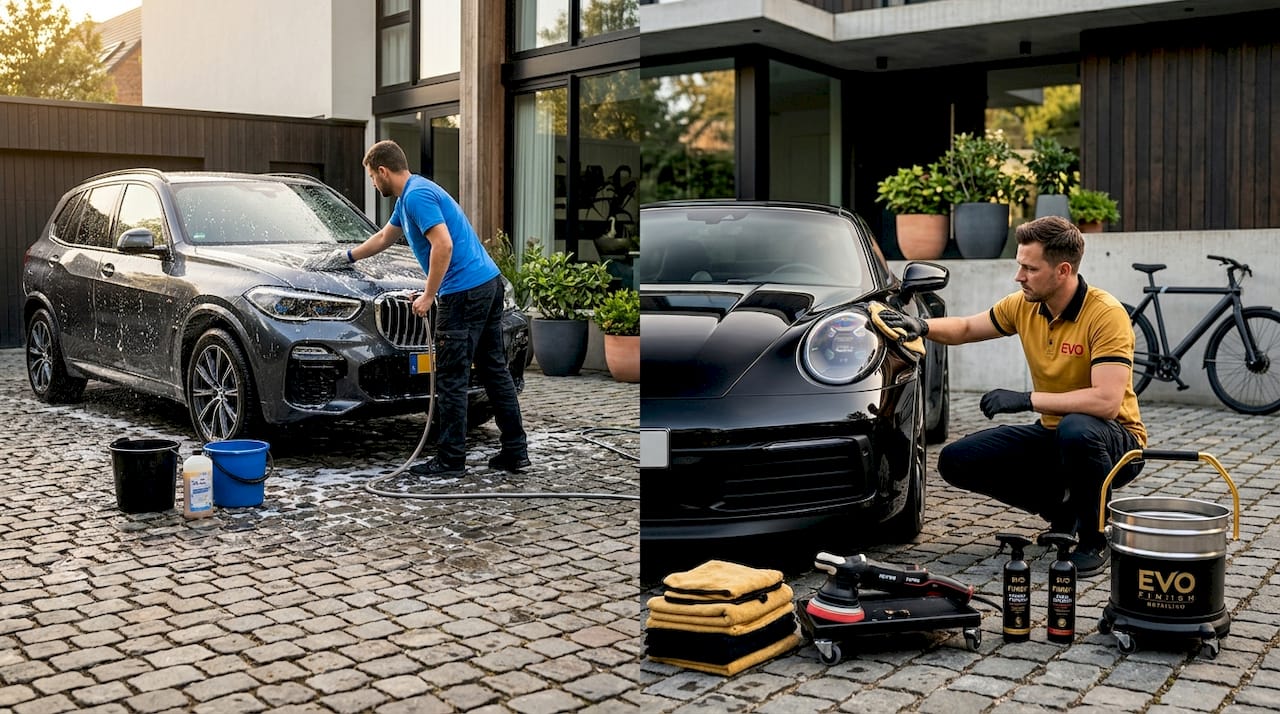
A car wash is a quick exterior rinse and scrub that removes loose dirt, while car detailing is a thorough, multi-step process that cleans, restores, and protects every surface of your vehicle inside and out. The differences between car wash and detailing go far beyond time and price. Detailing addresses bonded contaminants, surface defects, and interior wear that a standard wash never touches. Understanding what each service actually does helps you spend your money wisely, protect your paint, and keep your vehicle in the best possible condition for years to come.
What services and processes differentiate a car wash from car detailing?
A standard car wash follows a simple sequence: pre-rinse, soap application, mechanical or hand wash, rinse, and dry. The goal is to remove surface dirt and leave the car looking presentable. Basic car washes remove loose dirt and grime but do not remove bonded contaminants like rail dust, tar, or oxidation. That distinction matters because bonded contaminants are what make paint feel rough and look dull over time.
Car detailing, by contrast, is a structured restoration process. Exterior detailing covers far more ground than a wash, including decontamination, clay bar treatment, polishing, waxing, and optional ceramic coating. Each step targets a specific layer of the paint system, from surface contamination down to clear coat defects.
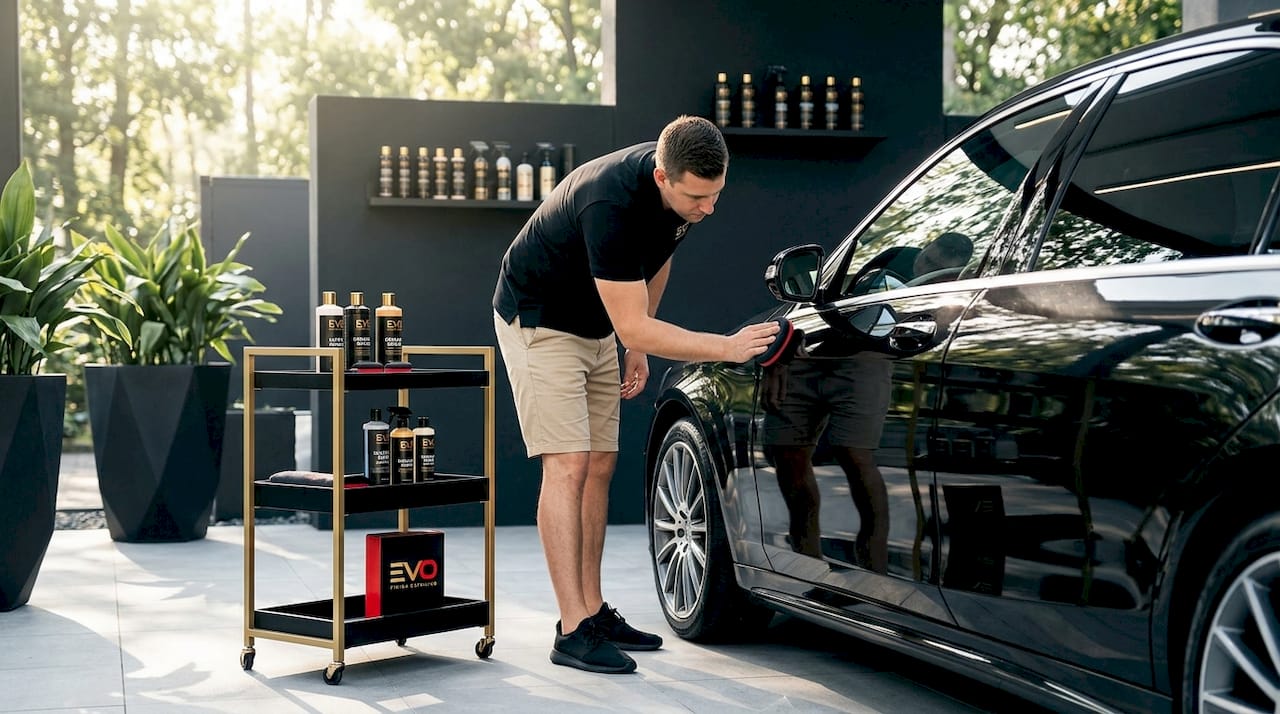
Here is what a full detailing service typically includes:
Exterior detailing steps:
Pre-wash and foam soak to loosen surface dirt
Hand wash with pH-neutral soap and microfiber mitts
Iron and tar decontamination spray
Clay bar treatment to pull bonded particles from the paint
Machine polishing to remove swirl marks and oxidation
Wax, paint sealant, or ceramic coating for lasting protection
Glass cleaning, tire dressing, and trim restoration
Interior detailing steps:
Full vacuum of seats, carpets, and trunk
Carpet and upholstery shampooing
Stain removal on fabric or leather surfaces
Leather conditioning to prevent cracking
Dashboard, door panel, and console cleaning
Odor treatment and air vent cleaning
Interior detailing includes vacuuming, shampooing, stain removal, leather conditioning, and odor control for a thorough cabin refresh. This level of care is especially important in dusty or humid environments where materials degrade faster without regular treatment.
Pro Tip: Run your hand across your paint after washing it. If it feels rough or gritty, your paint has bonded contamination that only a clay bar treatment can remove. A wash will not fix that.
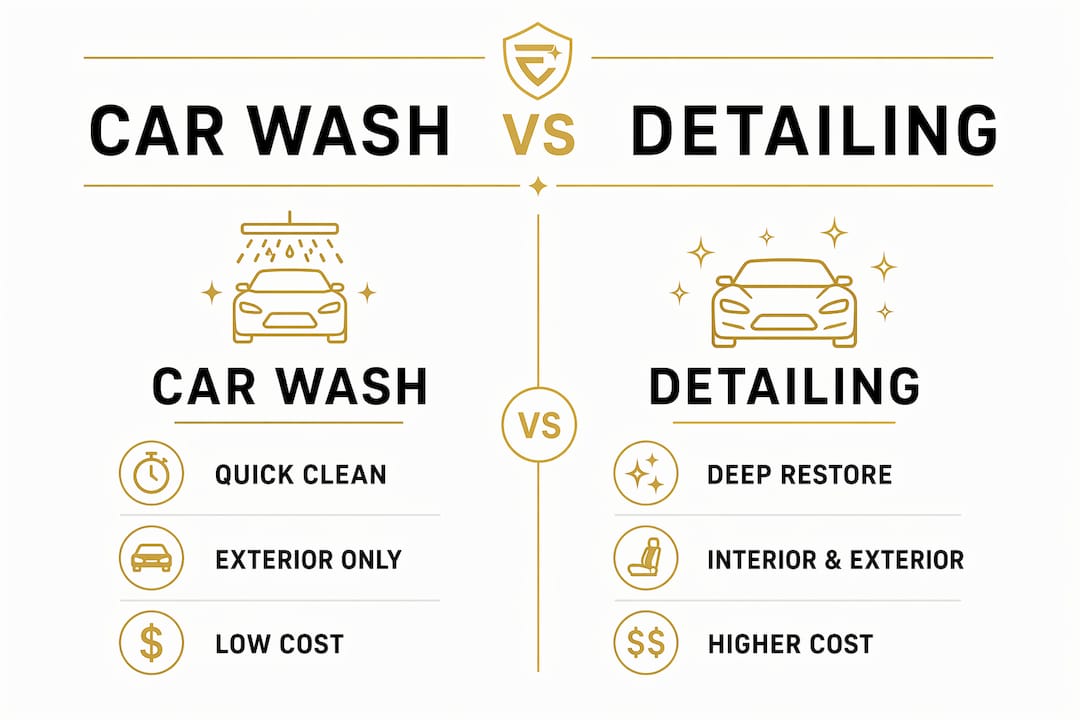
Premium detailing packages can also include engine bay cleaning, headlight restoration, and paint correction. These are specialized services that require professional tools and trained hands, not just soap and water.
How do costs and time requirements compare?
The price gap between a car wash and detailing reflects the difference in labor, products, and results. A basic automated car wash costs between $10 and $30. A hand wash at a professional facility runs $30 to $75. Detailing operates in a completely different range.
Service | Typical Cost | Typical Duration |
Automated car wash | $10 to $30 | 5 to 15 minutes |
Professional hand wash | $30 to $75 | 30 to 60 minutes |
Basic detailing package | $125 to $200 | 2 to 4 hours |
Full detail with correction | $300 to $600+ | 4 to 8 hours |
Intensive restoration detail | $800 to $1,000+ | 1 to 2 days |
A basic detailing package typically costs about $125 to $200, while intensive detailing or restoration can exceed $1,000. That price reflects the labor intensity, the quality of products used, and the depth of correction performed on your vehicle’s surfaces.
Time is the other major variable. A car wash is designed for speed. Detailing is designed for thoroughness. A full interior and exterior detail on a mid-size sedan in good condition takes four to six hours. A neglected SUV with heavy staining, oxidized paint, and contaminated surfaces can take a full day or more.
Factors that increase detailing time and cost include vehicle size, paint condition, the number of add-on services, and how long since the last professional treatment. A vehicle that receives regular maintenance washes and annual details will always cost less per session than one that has been neglected for three years.
Pro Tip: Ask your detailer for a paint inspection before booking. Knowing whether your paint needs light polishing or full correction lets you budget accurately and avoid paying for services you do not need.
Detailing aims to restore the car to near brand-new condition, not just quick cleaning. That goal justifies the higher price for owners who care about long-term preservation.
What benefits does car detailing offer that a basic wash cannot?
The benefits of car detailing extend well beyond a clean appearance. Detailing addresses problems that accumulate over time and cannot be reversed with a standard wash. Paint correction removes swirl marks, oxidation, and surface haze that make a car look aged even when it is mechanically sound.
Exterior detailing can include tar and iron removal, clay bar treatment, polishing, waxing, and ceramic coatings that protect paint long-term. Ceramic coatings in particular create a semi-permanent hydrophobic layer that repels water, dirt, and UV radiation for two to five years. A car wash applies no such protection.
The interior benefits are equally significant. Dust, allergens, and bacteria accumulate in carpets, vents, and seat seams over time. A vacuum removes surface debris, but only shampooing and deep extraction remove embedded particles that affect air quality and material condition. Leather conditioning prevents cracking and fading, which is damage that cannot be undone once it sets in.
Detailing is not just about cleaning. It is about preserving the vehicle’s appearance and preventing long-term deterioration that reduces both comfort and resale value.
Detailing services can significantly improve resale value by preserving paint and interior condition. A vehicle with clean, protected paint and a fresh interior commands a higher price at trade-in or private sale than one with dull, swirl-marked paint and stained upholstery. For many owners, a single annual detail more than pays for itself at resale.
The protective coatings applied during detailing also reduce how often you need to wash your vehicle. A ceramic-coated car sheds dirt and water far more effectively than bare paint, which means fewer washes and less risk of wash-induced scratches over time.
When should you choose a car wash versus detailing?
Choosing between a car wash and detailing depends on your vehicle’s current condition, your maintenance goals, and how much time has passed since the last professional treatment. Neither service replaces the other. They serve different purposes at different intervals.
Use a regular car wash when:
Your paint feels smooth and water still beads off the surface, indicating active protection is in place.
You need a quick clean before an event or after a road trip through dusty or muddy conditions.
You are maintaining a recently detailed vehicle between professional sessions.
Your budget does not allow for detailing at that moment but the car needs to stay presentable.
Schedule a professional detail when:
Your paint feels rough or gritty after washing, which signals bonded contamination that requires clay bar treatment.
You notice swirl marks, water spots, or a hazy appearance in direct sunlight.
You are preparing the vehicle for sale and want to maximize its presented condition and value.
Winter road salt, spring pollen, or summer UV exposure has built up on the paint and interior surfaces.
Interior odors, stains, or visible wear have developed beyond what a surface clean can address.
Matching service level to paint condition helps avoid damage. Maintenance washes suffice for smooth, well-protected surfaces, while rough or hazy paint benefits from detailing. Applying aggressive polishing to paint that only needs a wash wastes money and removes unnecessary clear coat thickness.
Pro Tip: Check your paint in direct sunlight at a low angle. Swirl marks and oxidation are nearly invisible in shade but become obvious in bright light. That visual test tells you whether a wash or a detail is the right call.
For matte or satin finishes, the rules change significantly. Matte paint cannot be polished without destroying the finish. Owners of matte vehicles should use only pH-neutral, matte-safe products and avoid any automated car wash with brushes or abrasive cloths.
Seasonal timing also guides smart service choices. A full detail in early spring removes winter salt and road grime before it causes corrosion. A detail in late fall applies protective coatings before cold weather and road chemicals arrive. Two professional details per year, combined with regular maintenance washes in between, represents the most cost-effective care schedule for most vehicles.
Key takeaways
Car detailing delivers lasting protection and restoration that a basic car wash cannot replicate, making it the right choice when paint condition, resale value, or interior preservation is the priority.
Point | Details |
Service scope | A car wash cleans the surface; detailing restores, protects, and treats both interior and exterior. |
Cost range | Basic detailing starts at $125 to $200; intensive restoration can exceed $1,000. |
Bonded contamination | Only clay bar treatment and decontamination sprays remove tar, iron, and rail dust from paint. |
Resale value | Detailing preserves paint and interior condition, directly improving trade-in and private sale value. |
Service timing | Use washes for maintenance between details; schedule detailing when paint feels rough or looks hazy. |
Why knowing the difference changes how you care for your car
We have detailed hundreds of vehicles at Evofinish, and the pattern we see most often is this: owners who rely only on car washes are surprised when their paint looks dull and aged at the five-year mark. They assumed washing was enough. It is not.
A car wash keeps a protected surface clean. It does nothing for a surface that has already lost its protection. Once oxidation sets in or swirl marks accumulate, no amount of washing reverses the damage. Only paint correction does that, and correction removes a thin layer of clear coat each time. There is a finite number of corrections a vehicle can receive before the clear coat is too thin to work with safely.
The owners who get the most out of their vehicles are the ones who treat detailing as scheduled maintenance, not a luxury. They wash regularly, detail twice a year, and apply protective coatings that make every wash easier and every detail less intensive. Their vehicles look better at 100,000 miles than most cars look at 30,000.
The uncomfortable truth is that many car owners underestimate how quickly a basic wash’s results fade compared to the lasting protection from detailing. A wash looks great for two days. A ceramic coating protects your paint for years. That is not a small difference. It is the entire point.
— EVO
Get meticulous care from Evofinish mobile detailing
At Evofinish, we bring precision detailing directly to your driveway. No drop-off, no waiting rooms, no wasted time.

Our services cover everything from exterior wash and clay bar decontamination to full paint correction and ceramic coating application. We also provide thorough interior cleaning, leather conditioning, and odor treatment for a complete cabin refresh. Every vehicle receives a personalized assessment so you get exactly the level of care your paint and interior actually need. Whether you need a maintenance detail or a full restoration, we deliver guaranteed satisfaction at your location. Book your detail today and let us show you what your vehicle is capable of looking like.
FAQ
What is the main difference between a car wash and detailing?
A car wash removes surface dirt through a quick rinse and scrub, while detailing is a multi-step process that deep cleans, restores paint, and applies protective treatments to both the interior and exterior.
How much does car detailing cost compared to a car wash?
A basic car wash costs $10 to $75 depending on the service type, while a professional detailing package starts at $125 to $200 and can exceed $1,000 for intensive restoration work.
Does car detailing improve resale value?
Yes. Detailing preserves paint condition and interior materials, both of which directly affect how much a buyer or dealer will pay for your vehicle at trade-in or private sale.
How often should I get my car detailed?
Most vehicles benefit from two professional details per year, with regular maintenance washes in between. Vehicles exposed to harsh winters, heavy pollen, or frequent off-road use may need more frequent attention.
Can a car wash damage my paint?
Automated car washes with rotating brushes can introduce fine scratches and swirl marks over time. Professional hand washing with proper microfiber tools and pH-neutral soap reduces that risk significantly.
Recommended
Comments