


Car Polishing Service: What Your Paint Actually Needs

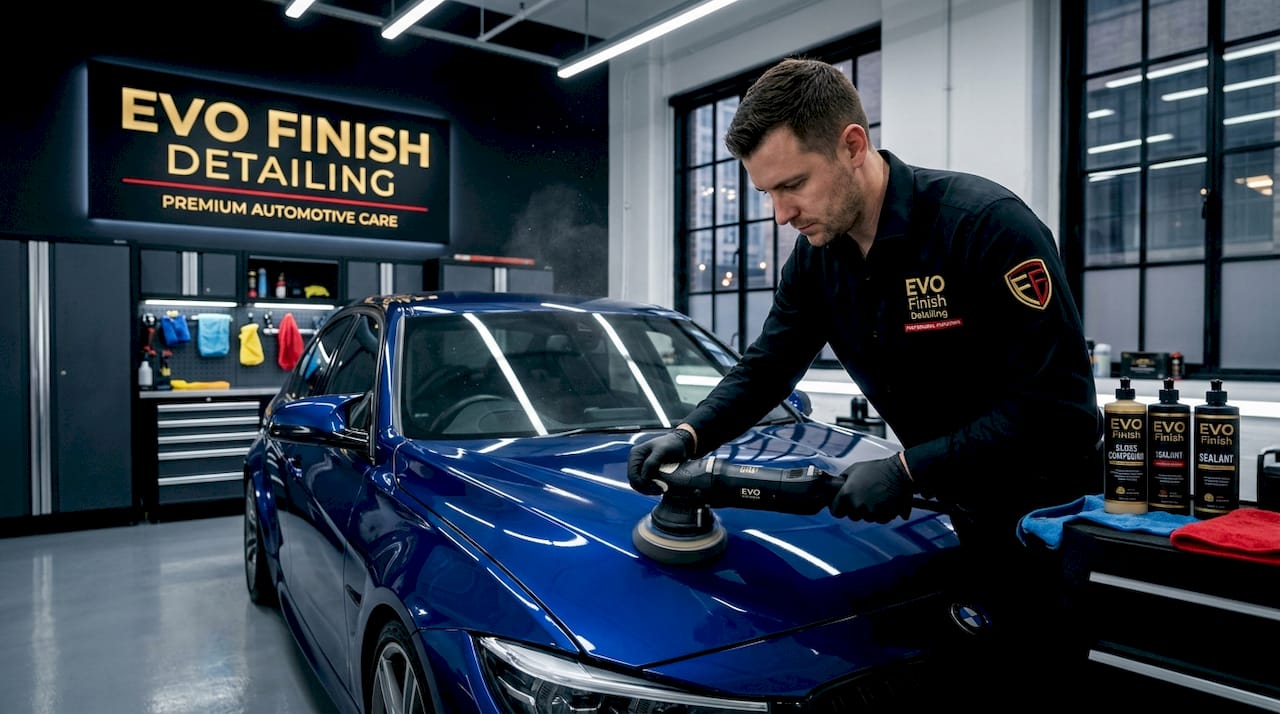
A car polishing service is a professional paint correction treatment that removes surface defects like swirl marks, scratches, and oxidation to restore clarity and gloss to your vehicle’s exterior. Unlike a simple car wash or wax, polishing works by abrading the clear coat to level out imperfections before any protective finish is applied. At Evofinish, we treat every vehicle as a precision project, not a quick turnaround. The service you choose, whether a single-stage enhancement or a full multi-stage correction, determines how much of your paint’s original depth and brilliance comes back.
What car polishing service levels actually mean
Paint correction is the industry term for what most people call car polishing. The phrase covers a spectrum of services, from a light one-stage enhancement to a three-stage full correction, and the difference between them is not just time. It’s the depth of defect removal, the aggressiveness of the compounds used, and the condition of your paint going in.
A one-stage enhancement polish targets light swirl marks and is the right call for newer vehicles or paint in good condition. A one-stage polish takes 2.5 to 6 hours on a mid-size vehicle, making it a realistic same-day service. This level improves gloss and removes minor surface haze without cutting deeply into the clear coat.
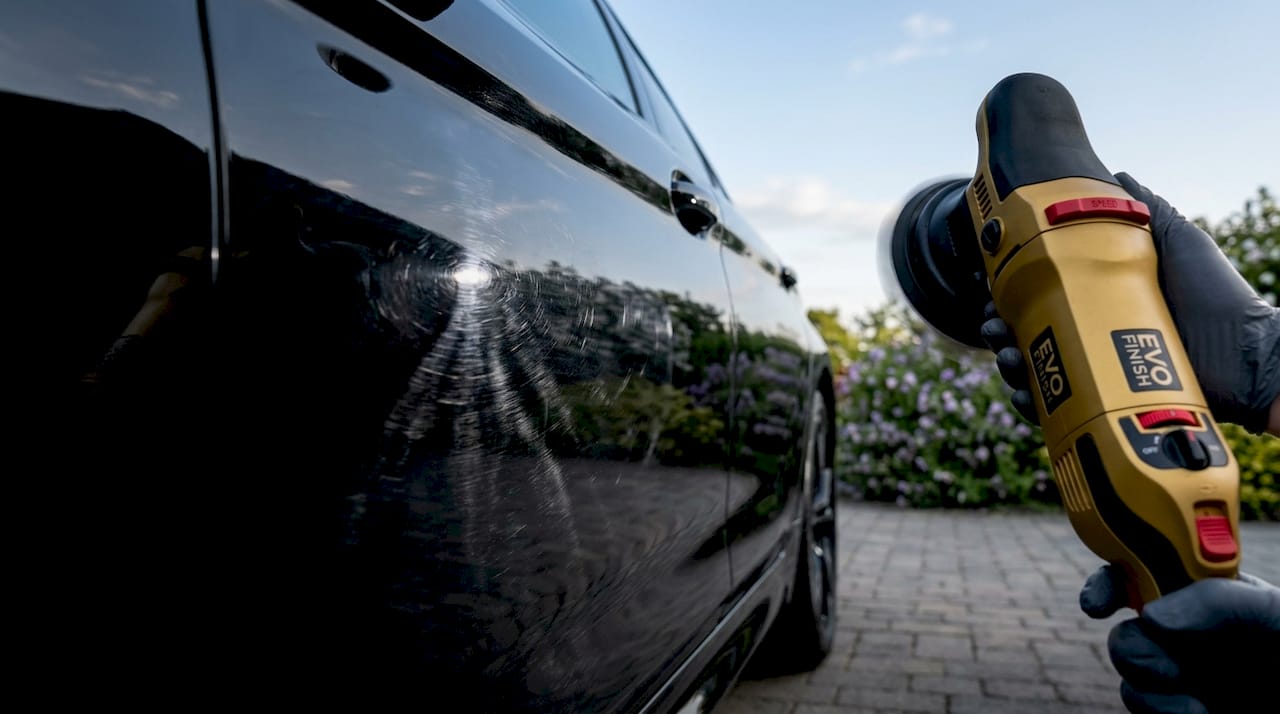
A two-stage correction adds a cutting pass before the finishing pass, addressing deeper swirls, water spots, and light scratches. Two-stage correction runs 4.5 to 12 hours depending on vehicle size and paint condition. A three-stage correction is reserved for heavily neglected or oxidized paint and can take 8 to 25 or more hours. That time investment is not padding. Roughly 60 to 70% of total correction time is spent on machine polishing, with the rest on preparation and final inspection.
Vehicle size and paint color are real variables. Full-size SUVs can require 15 to 25 or more hours for a full correction, and black or dark paint demands extra passes to eliminate visible defects that lighter colors hide. This is why a flat hourly quote without knowing your vehicle’s specifics is a red flag.
Correction level | Typical duration | Best for |
1-stage enhancement | 2.5–6 hours | New cars, light swirls, pre-sale prep |
2-stage correction | 4.5–12 hours | Moderate swirls, water spots, light scratches |
3-stage full correction | 8–25+ hours | Heavy oxidation, deep scratches, neglected paint |
Pro Tip: Ask your detailer to specify which correction stage they are quoting before you book. A shop that cannot answer that question clearly is likely offering a one-size-fits-all polish regardless of your paint’s actual condition.
Why polishing before ceramic coating matters more than the coating itself
Skipping polishing before applying a protective coating is one of the most common and costly mistakes car owners make. Applying ceramic coating without prior polishing can cause swirl marks and oxidation to become permanently visible through the coating layer. The coating does not fill defects. It magnifies them under its glass-like surface.
Professional paint correction removes those defects first, giving the coating a clean, uniform surface to bond to. Light polishing before coating improves finish consistency and coating performance, which means better gloss and longer protection life. This is why reputable detailers treat polishing and ceramic coating application as a single workflow, not two separate services you can mix and match.
The protection type you choose after polishing also determines how long your results last. Here is how the main options compare:
Protection type | Durability | Notes |
Carnauba wax | 4–8 weeks | Natural finish, requires frequent reapplication |
Synthetic sealant | 3–6 months | Better UV resistance than wax |
DIY ceramic coating | 12–36 months | Consumer-grade, thinner layer |
Professional ceramic coating | 3–7 years | Chemically bonded glass layer, requires annual maintenance |
The gap between carnauba wax and a professional ceramic coating is not just marketing. It is chemistry. Professional ceramic coatings form a thick glass layer chemically bonded to the clear coat, making them far more durable than wax or sealants. That durability only holds when the surface underneath is properly prepared.
Preparation details that directly affect coating longevity include:
Iron removal to pull embedded metallic particles from the paint
Clay bar treatment to strip bonded surface contaminants
Polishing oil removal after the correction stage, before coating application
Final wipe-down with an IPA (isopropyl alcohol) solution to strip any residue
Skipping prep risks coating failure due to residues or embedded contaminants, regardless of how premium the coating product is. The prep work determines coating longevity more than product choice alone.
How to choose the right polishing service for your vehicle
The right car polishing service starts with an honest assessment of your paint’s current condition and your goals. Are you correcting years of neglect, or refreshing a well-maintained vehicle before a show or sale? Those two scenarios call for completely different service levels and budgets.
Start by examining your paint in direct sunlight or under a single overhead light source. Swirl marks appear as circular scratches in the clear coat. Oxidation looks like a chalky, faded surface. Deep scratches that catch your fingernail have broken through the clear coat and require wet sanding before polishing, not just a standard correction pass.
When evaluating providers, ask these questions directly:
Which correction stage are you quoting, and why?
How do you assess paint condition before pricing the job?
What compounds and pads do you use, and do you run test spots first?
How long will the job take, and will my car be ready same day?
What protection do you recommend after polishing, and why?
Pricing for professional vehicle detailing varies by correction level and region. A one-stage enhancement typically runs less than a two or three-stage correction, which can cost significantly more due to the time and product investment involved. The cheapest quote is rarely the best value when paint correction is involved. A rushed job leaves behind haze, buffer trails, or uneven correction that is visible in direct light.
Pro Tip: Check your detailer’s work photos in direct sunlight, not just studio shots. Defects and buffer trails only show up under harsh lighting. If a shop only posts indoor photos, ask why.
For car owners who cannot easily get to a shop, mobile car polishing brings the service to your driveway. Mobile detailing is a practical option for busy schedules, though it requires a shaded outdoor space or covered area to avoid direct sun during polishing.
What the polishing process looks like step by step
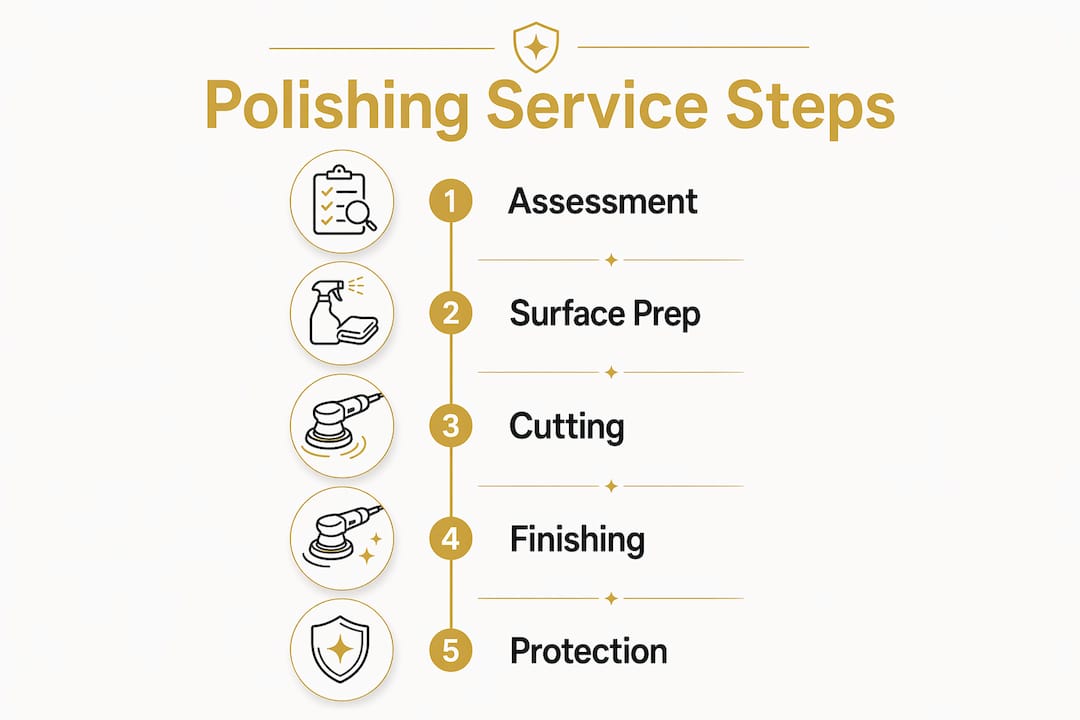
Understanding the workflow helps you set realistic expectations and spot shortcuts. A professional auto polishing service follows a consistent sequence regardless of correction level.
Wash and decontamination. The vehicle receives a thorough wash, followed by iron remover spray to dissolve embedded metallic particles, and a clay bar treatment to strip bonded contaminants from the paint surface.
Test spots. Before committing to a full correction, technicians run test spots on a small panel to identify the best compound and pad combination for that specific vehicle’s paint. This step prevents wasted time and avoids over-cutting soft paint or under-cutting hard paint.
Cutting pass. For two and three-stage corrections, a cutting compound and a firmer foam or microfiber pad removes the bulk of defects. This is the most aggressive step and the one that consumes the most time.
Finishing pass. A finer polish and softer pad refines the surface, removes any haze left by the cutting stage, and restores deep gloss. Each polishing stage improves finish clarity and defect removal progressively.
Final inspection. Technicians inspect the paint under a high-intensity light to confirm defect removal and catch any remaining buffer trails or missed areas.
Protection application. Wax, sealant, or ceramic coating is applied to the corrected surface. For ceramic coatings, the vehicle must remain dry and out of rain for a curing period of 24 to 48 hours.
A typical 2-stage correction on a mid-size sedan takes 7 to 10 hours total including prep and finishing. Plan for a full day drop-off, not a two-hour appointment. Shops that promise full correction in under three hours on a neglected vehicle are cutting steps, not saving time.
Key takeaways
A professional car polishing service delivers lasting results only when correction level, prep work, and protection choice are matched to your paint’s actual condition.
Point | Details |
Match correction to paint condition | Choose 1-stage for light swirls, 2 or 3-stage for deeper defects and neglected paint. |
Prep determines coating performance | Iron removal, clay bar, and polish oil removal directly affect how long any coating lasts. |
Polishing before coating is non-negotiable | Defects locked under ceramic coating become permanently visible and degrade the finish. |
Time reflects quality | A proper 2-stage correction on a sedan takes 7 to 10 hours. Rushed jobs leave haze and buffer trails. |
Protection durability varies widely | Professional ceramic coatings last 3 to 7 years. Carnauba wax lasts 4 to 8 weeks. |
What I’ve learned from watching owners skip the prep
The most common regret I hear from car owners is not that they spent too much on polishing. It’s that they skipped it before coating and spent the money twice. Applying a premium ceramic coating over unpolished paint does not protect your investment. It preserves the defects permanently.
Rushing the correction stage is just as damaging. A detailer who skips test spots and goes straight to a cutting compound on unknown paint is guessing. Soft European clear coats and hard Japanese clear coats respond completely differently to the same compound and pad combination. Getting that wrong means burning through the clear coat or leaving defects untouched.
The other misconception I see constantly is treating polishing as a one-time fix. Paint correction restores your paint to its best condition. What happens after that depends entirely on the protection you apply and how you maintain it. Professional ceramic coatings require annual maintenance to hold their warranty and performance. Skipping that maintenance is the same as skipping the prep. You get diminishing returns on a significant investment.
Prioritize communication with your detailer. A shop that walks you through the step-by-step polishing process before starting, explains what correction stage fits your paint, and gives you a realistic time estimate is a shop worth trusting with your vehicle.
— EVO
Get flawless paint with Evofinish mobile detailing
At Evofinish, we bring precision paint correction and ceramic coating directly to your location. Our technicians assess your paint condition before quoting a correction stage, run test spots on every vehicle, and never skip the decontamination prep that determines how long your protection lasts. We handle everything from single-stage enhancement polishes to full multi-stage corrections, followed by professional ceramic coating application with guaranteed satisfaction.
You do not need to take a day off work to get your paint corrected. Evofinish comes to you, whether that’s your driveway, office parking lot, or garage. Every service includes a thorough wash, decontamination, and your choice of protective finish. Book your detail today and get a meticulous, lasting result from technicians who treat your paint the way it deserves.
FAQ
What is a car polishing service?
A car polishing service is a professional paint correction treatment that uses abrasive compounds and machine polishers to remove surface defects like swirl marks, scratches, and oxidation from a vehicle’s clear coat. The result is restored gloss and a defect-free surface ready for protective coatings.
How long does professional car polishing take?
Duration depends on the correction level. A one-stage enhancement takes 2.5 to 6 hours, a two-stage correction takes 4.5 to 12 hours, and a three-stage full correction can take 8 to 25 or more hours depending on vehicle size and paint condition.
Do I need to polish my car before ceramic coating?
Yes. Applying ceramic coating over unpolished paint permanently locks in swirl marks and oxidation, making them visible through the coating. Polishing first creates a clean, defect-free surface that improves coating bonding and long-term gloss.
How often should I get a car polishing service?
Most vehicles benefit from a professional polish every one to two years, depending on how the paint is maintained and what protection is applied afterward. Vehicles with ceramic coatings require less frequent correction than those protected only with wax.
What is the difference between car polishing and car waxing?
Polishing removes paint defects by abrading the clear coat. Waxing adds a protective layer on top of the paint without correcting defects. Wax lasts 4 to 8 weeks, while a properly polished surface protected with professional ceramic coating lasts 3 to 7 years.
Recommended
Comments